Get in contact with us: 011 314 0555 / info@wanawake-is.co.za
Wanawake
  • Home
  • Meet The Team
  • Downloads
  • Products
    • Hi-Force
    • alkitronic®
      • Battery Driven Torque Multipliers
      • Electric Torque Multipliers
      • Pneumatic Torque Multipliers
      • Manual Torque Multipliers
      • Plate Heat Exchanger Tools
    • Sygma
      • MiniFacer Series
      • Alpha Series
      • Delta Series
      • Xtreme Series
    • InterBolt
    • Hifi Filter
    • Uniglide
  • Services
    • Tool rental
    • Tool Financing – For Those High Value Items
    • On Site Bolting Solutions
    • Tool Repair & Maintenance
    • Training
  • News
  • Contact Us
  • Click to open the search input field Click to open the search input field Search
  • Menu Menu
  • Link to Facebook
  • Link to LinkedIn
  • Link to Instagram
  • Link to Youtube

How to Choose Industrial Equipment Suppliers in South Africa: Look Beyond the Quote

News

Choosing industrial equipment suppliers in South Africa comes down to more than price: the right partner helps you match equipment to the application, prepare for maintenance, and keep work moving. Wanawake Industrial Supplies believes the most useful question is simple: what will it take to get this job done properly?

A hydraulic cylinder might look right on paper. A torque wrench might meet the stated output. A replacement filter might appear to fit. But procurement decisions become much more useful when they account for the conditions surrounding the equipment: access, compatibility, operating demands, operator competence, and ongoing support.

For South African mining, energy, oil and gas, and heavy industrial businesses, those details deserve attention before the purchase order goes through.

Here’s how to choose an industrial equipment supplier who can help you connect them.

Start with the Job, Not the Product Catalogue

Imagine a maintenance team preparing for a planned shutdown. They’ve ordered the main tools, booked the work, and allocated people. Then, during preparation, they discover that an essential accessory hasn’t been included. The equipment itself may be perfectly suitable. The package is incomplete.

This hypothetical scenario illustrates a common procurement blind spot: buying an individual item without checking everything required to use it. A useful equipment enquiry starts with the task. What needs to be lifted, tightened, separated, filtered, or machined? Where will the work happen? What restrictions could affect the choice?

Before requesting a quotation, gather:

  • The application and intended outcome.
  • Relevant equipment models, part numbers, drawings, or photographs.
  • Required capacity, torque, pressure, stroke, or dimensions, where applicable.
  • Access restrictions and available working space.
  • Available power or compressed air.
  • Operating conditions and expected frequency of use.
  • The site location and required delivery date.

You don’t need to arrive with every technical answer. A clear description gives the supplier a stronger starting point and helps identify what still needs confirming.

We supply specialist industrial equipment with solutions tailored to customers’ applications. That makes the conversation about the job an essential part of selecting the equipment.

Look for Relevant Expertise Across Connected Tasks

A wide product range is useful, but the right solutions matter more than the number of products available. Experienced industrial equipment suppliers understand that industrial maintenance often involves several connected tasks that require compatible equipment and specialised tools.

For example, flange-related work may involve bolting, separation, sealing, and surface preparation. Treating each requirement as a separate purchase can create gaps in the overall maintenance process.

At Wanawake Industrial Supplies, our product range includes hydraulic tools, torque equipment, lifting solutions, pumps, gaskets, flange management equipment, and filtration products. This gives customers access to complementary equipment categories when sourcing solutions for industrial maintenance and project requirements.

Hydraulic lifting and maintenance equipment

Our Hi-Force range includes hydraulic cylinders, pumps, jacks, Toughlift jacking systems, bolt tensioners, hydrotest pumps, puller kits, nut splitters, and flange spreaders.

The selection process should consider the complete working arrangement. For lifting equipment, capacity is one consideration alongside stroke, available clearance, operating configuration, and compatibility with the rest of the system.

For hydraulic tooling, the pump, hoses, couplings, and tool need to be considered together. A suitable individual component doesn’t automatically make a suitable system.

Torque tools and bolting solutions

Our offering includes Hi-Force bolting equipment and alkitronic® torque tools, with electric, pneumatic, and manual options available across the relevant ranges.

Selecting bolting equipment involves more than finding a tool with a sufficiently high maximum torque. Working access, the required torque range, reaction arrangements, available power, and the specified procedure all influence suitability.

We also offer on-site bolting solutions, giving customers a service option to discuss alongside equipment supply.

Filtration and separation

Through HIFI FILTER®, we offer filtration and separation products for mobile equipment and industrial processes.

Here, a useful starting point is the machine or system specification and the correct filter reference. Where an alternative is proposed, compatibility needs checking rather than assuming that similar dimensions mean equivalent performance.

Portable machining and flange-facing solutions

Our range also includes Sygma portable machines and bolting solutions, alongside Metalock Machines for on-site machining requirements.

Where work may be carried out on installed equipment, discuss the component dimensions, access, required result, and site conditions early. Those details help establish whether the proposed approach is practical.

Compare the Complete Cost of Getting the Work Done

The lowest quotation is easy to spot. The most suitable overall package takes a little more investigation. When comparing industrial equipment suppliers in South Africa, ask what each quotation includes and what you’ll need to arrange separately.

A purchase price may cover the main tool while leaving out accessories, delivery, training, or future servicing. Another quotation may appear higher because it includes more of the working package.

A fair comparison should account for:

What to compare Why it matters
Equipment and accessories Establishes whether the package is ready for the intended task
Delivery and availability Helps align supply with maintenance or project dates
Training requirements Identifies the support operators may need
Inspection, testing, and calibration Clarifies how equipment condition or performance will be checked
Maintenance and repairs Helps plan support during the equipment’s working life
Expected utilisation Informs whether purchase, rental, or another arrangement makes sense

Not every item applies to every purchase. The aim is to expose meaningful differences before deciding.

A useful internal question is: what would make this apparently affordable purchase expensive to use?

Possible answers include missing accessories, unsuitable specifications, avoidable delays, or a lack of service support. Identifying those issues early makes the buying decision stronger.

Decide Whether You Need Ownership or Access

Some tools earn their place in the workshop every day. Others are needed for a particular shutdown or an occasional specialist task. That distinction should influence how you source them.

Our services include tool rental and rent-to-own options, alongside equipment sales. These give customers different arrangements to discuss according to the job and expected usage.

  •         When purchasing may make sense: Buying can be practical when equipment will be used regularly, immediate access is important, and the business can manage storage, maintenance, and inspection requirements. Ownership also gives you responsibility for keeping the equipment ready for service.
  •         When rental deserves consideration: Rental may suit a defined project, temporary demand, or an application requiring equipment outside your normal tooling range. Our rental offering includes specialist hydraulic equipment. Discuss the required tool, supporting components, hire period, availability, and applicable terms before planning work around it.
  •         When to explore rent-to-own: Rent-to-own may be worth discussing when there’s an ongoing requirement and a business wants to consider a different route to ownership. Ask for the full commercial terms, including payment obligations, maintenance responsibilities, and the conditions governing ownership transfer.

The useful choice is the one that fits the work and the business’s budget.

Ask What Happens After Delivery

Delivery is a milestone in the supplier relationship. For equipment that supports ongoing maintenance or production, it’s also the beginning of its working life. Before choosing a supplier, ask how they’ll support the product once it’s in use.

Our support services include tool repair and preventative maintenance, torque calibration, hydraulic load and pressure testing, technical advice, and training.

These services address different needs. Calibration assesses measurement performance against a reference; maintenance addresses equipment condition; testing evaluates specified aspects of performance. One shouldn’t be assumed to replace another.

For your particular equipment, establish:

  • Which services are available.
  • What documentation accompanies the work.
  • How servicing or calibration is arranged.
  • What turnaround time is anticipated.
  • Whether replacement or rental equipment can be discussed while a tool is unavailable.

This is especially useful when planning shutdowns. Support arrangements are easier to organise before a tool becomes urgently needed.

Treat Training as Part of Equipment Readiness

A new tool arriving on site doesn’t automatically mean the team is ready to use it. Operators may need to understand setup, controls, inspection requirements, operating limits, and the procedure for the task. Even experienced personnel can benefit from training when introducing unfamiliar equipment.

We offer tool training courses and have a training facility in Midrand, Gauteng. When enquiring about training, explain which equipment the team will use and the work they’ll carry out. Ask about course content, practical elements, suitability for the participants, and any documentation provided.

Training should support the employer’s site procedures and competency requirements. It’s most useful when linked to the actual work rather than treated as an item to tick off after procurement.

Make South African Site Logistics Part of the Discussion

A quotation and a delivery plan answer different questions. For a workshop in Gauteng, a mine in the Northern Cape, or an energy project elsewhere in the country, equipment availability needs to align with the location and schedule.

Ask whether the item is currently available, requires sourcing, or needs a specialised configuration. Confirm the delivery destination and distinguish an estimated lead time from a committed date. Where your procurement process requires supplier documentation, request the relevant current records early and check that they apply to the contracting entity.

Our head office, workshop, and training facility are based in Midrand, and we serve customers across South Africa and the wider African market. Share your site requirements at the enquiry stage so that supply and support arrangements can be discussed together.

Recognise the Questions a Useful Supplier Should Ask

An industrial equipment supplier who asks detailed questions may be helping you avoid an unsuitable purchase.

If the application is unclear, an immediate quotation can leave assumptions hidden. A more useful conversation might establish the required output, confirm compatibility, or identify an accessory that wasn’t included in the initial request.

Look for clear explanations of:

  • Why a particular product has been proposed.
  • What information still needs confirming.
  • What the equipment package includes.
  • Which limitations apply.
  • What support is available after purchase.

Manufacturer relationships matter, too. Our portfolio includes brands such as Hi-Force, alkitronic®, Sygma, InterBolt, and HIFI FILTER®, connecting customers with specialist tooling and industrial solutions.

However, brand recognition should sit alongside application suitability. The right product is the one selected for the job, with the necessary support around it.

Choose a Supplier Who Helps You Prepare for the Whole Job

The strongest way to compare industrial equipment suppliers in South Africa is to assess how well they connect the equipment, the application, and the support required.

Price remains part of that decision. So do availability, compatibility, operator readiness, maintenance, and practical access to technical assistance.

We bring specialist product supply together with rental options, on-site bolting solutions, repair, testing, calibration, and training. This gives customers several ways to address an industrial tooling requirement rather than approaching every enquiry as a straightforward equipment sale.

A good procurement decision should leave your team knowing what they’re getting, why it’s suitable, and what happens next.

Get the Right Equipment and Support from Wanawake Industrial Supplies

Preparing for a shutdown, replacing essential tooling, or sourcing equipment for a new project? Speak to us before finalising your equipment list.

Send us your application details, specifications, photographs, required quantities, site location, and target date. We’ll help you explore suitable products and discuss the supply, rental, and support options relevant to your requirements.

Call 011 314 0555 or email info@wanawake-is.co.za to request a quotation and discuss your application with our team.

FAQs About Industrial Equipment Suppliers

What should I look for in industrial equipment suppliers in South Africa?

Look for relevant product expertise, clear specifications, transparent quotations, realistic delivery information, and suitable after-sales support. Ask how the supplier helps confirm compatibility and whether they offer the maintenance, calibration, testing, or training your equipment may require.

What equipment does Wanawake Industrial Supplies offer?

We supply hydraulic lifting equipment, pumps, torque tools, bolt tensioners, hydraulic maintenance tools, pneumatic tooling, gaskets, filtration products, and flange management solutions. Our portfolio also includes portable machining equipment.

Which industries does Wanawake Industrial Supplies serve?

We serve heavy industrial sectors, including mining, oil and gas, energy, and power generation, across South Africa and the wider African market.

Can I rent industrial tools from Wanawake Industrial Supplies?

Yes. We offer tool rental, including specialist hydraulic equipment. Contact us to discuss the application, required rental period, equipment availability, and applicable terms.

Does Wanawake Industrial Supplies provide repairs and calibration?

Yes. Our services include tool repair and preventative maintenance, torque calibration, and hydraulic load and pressure testing. Confirm the service scope and documentation required for your particular equipment when booking.

Does Wanawake Industrial Supplies offer equipment training?

Yes. We offer tool training courses and have a training facility in Midrand. Speak to us about the equipment your team uses and the relevant training options.

What information should I send when requesting a quotation?

Include the task, equipment specifications or part numbers, quantities, operating conditions, site location, and required date. Photographs, drawings, and details of existing equipment can also help us understand compatibility and access requirements.
Follow us on Facebook, Instagram, LinkedIn and Youtube

October 22, 2026
https://wanawake-is.co.za/wp-content/uploads/2023/04/Wanawake-logo-600x200-2.png 0 0 srsbsnsadmin https://wanawake-is.co.za/wp-content/uploads/2023/04/Wanawake-logo-600x200-2.png srsbsnsadmin2026-10-22 12:27:272026-10-22 12:27:27How to Choose Industrial Equipment Suppliers in South Africa: Look Beyond the Quote

Plate Heat Exchanger Tools: A Guide to Maintenance and Servicing

News

Plate heat exchangers play an important role in countless industrial processes, transferring heat efficiently between fluids while keeping the different media separated. From power generation and mining to manufacturing, petrochemical operations, and processing plants, these systems often work continuously under demanding conditions.

Like any piece of critical industrial equipment, however, a plate heat exchanger needs proper maintenance to continue performing reliably.

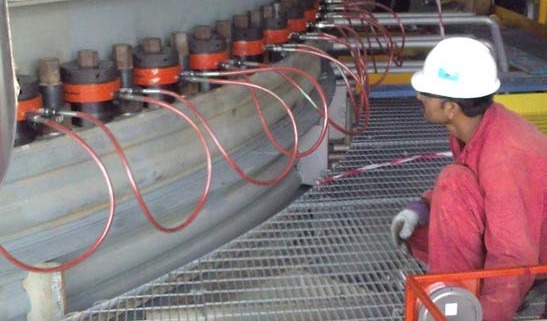
Opening, servicing, inspecting, and correctly closing a large plate heat exchanger can involve substantial bolting forces and long threaded connections. Attempting to manage these connections with unsuitable equipment can make maintenance unnecessarily slow and may increase the possibility of uneven tightening, damaged components, or avoidable downtime.

This is where specialised plate heat exchanger tools become particularly valuable.

Wanawake Industrial Supplies provides industrial customers with professional tooling solutions designed for applications where precision, reliability, efficiency, and safety matter. Our alkitronic® plate heat exchanger tooling solutions are specifically engineered to make the tightening and loosening of plate heat exchanger bolting connections faster, more controlled, and more practical for maintenance teams.

What Are Plate Heat Exchanger Tools?

Plate heat exchanger tools are specialised industrial tools used to assist with the bolting connections that secure a plate heat exchanger’s plate pack.

A gasketed plate heat exchanger typically consists of numerous heat transfer plates compressed between frame components. Tie bolts, spindles, or other long threaded connections maintain the required compression across the plate pack.

When servicing is required, these connections must usually be loosened so that the heat exchanger can be opened. Once inspection, cleaning, gasket replacement, or other maintenance has been completed, the plate pack must be recompressed according to the equipment manufacturer’s requirements.

This process is considerably easier with purpose-designed torque equipment.

alkitronic® plate heat exchanger tools supplied by Wanawake Industrial Supplies are designed for continuous rotational tightening and loosening of heavy bolted connections, including applications involving long threads.

Rather than relying solely on labour-intensive conventional methods, maintenance teams can use powered torque multipliers to improve efficiency and control.

Why Plate Heat Exchanger Maintenance Matters

Heat exchanger performance can gradually deteriorate as equipment operates.

Depending on the application, operating environment, fluids being processed, and maintenance schedule, deposits can accumulate on heat transfer surfaces. Gaskets may deteriorate, plates may require inspection, and components can experience normal wear.

Poor heat exchanger performance may result in consequences such as:

  • Reduced heat transfer efficiency
  • Increased energy consumption
  • Lower process efficiency
  • Leakage
  • Unplanned shutdowns
  • Increased operating costs
  • Greater strain on associated plant equipment
  • Longer maintenance interventions

Preventative servicing of plate heat exchangers allows maintenance teams to identify developing problems before they lead to costly downtime or more extensive repairs.

The tools and equipment used during servicing are equally important. A plate heat exchanger may be thoroughly cleaned and inspected, but if the plate pack is not compressed correctly and evenly afterwards, equipment performance, efficiency, and reliability can still be affected.

Why Specialised Plate Heat Exchanger Tools Make a Difference

Large industrial plate heat exchangers can contain substantial plate packs secured using multiple long threaded connections.

Turning these connections manually can be slow and physically demanding. The challenge becomes even greater when maintenance teams are dealing with large equipment or scheduled shutdowns where every hour matters.

Purpose-designed torque multipliers offer several important advantages.

Faster Tightening and Loosening

Continuous rotation makes it possible to run nuts along long threaded connections considerably more efficiently than many conventional tightening methods.

This can reduce the amount of time required to open or close the exchanger during servicing.

For South African plants operating around strict shutdown schedules, reducing maintenance time can have a meaningful impact on overall plant availability.

More Controlled Torque Application

Correct tightening is about more than simply applying as much force as possible.

Torque must be controlled appropriately for the bolting arrangement and the heat exchanger manufacturer’s requirements.

Specialist plate heat exchanger tools allow technicians to apply controlled torque, helping reduce the likelihood of equipment damage caused by inappropriate tightening.

More Even Plate Pack Compression

Large plate packs generally need to be compressed evenly.

Depending on the exchanger and approved maintenance procedure, multiple torque tools can be positioned across the exchanger to help tighten connections in a controlled manner.

Using two or more suitable torque multipliers can significantly improve the efficiency of tightening large plate packs while supporting more uniform compression.

Reduced Manual Effort

Industrial bolting can demand considerable physical effort when performed using conventional manual methods.

Powered torque equipment reduces the physical workload associated with repetitive tightening and loosening tasks, helping maintenance teams work more effectively.

Improved Shutdown Efficiency

In heavy industry, downtime is expensive.

Whether a heat exchanger is operating in a mine, refinery, power station, chemical facility, manufacturing plant, or another process environment, maintenance needs to be completed carefully without taking longer than necessary.

The right tooling allows technicians to spend less time dealing with repetitive bolting and more time concentrating on the actual condition of the equipment.

alkitronic® Plate Heat Exchanger Tools from Wanawake Industrial Supplies

We supply alkitronic® torque technology developed for demanding industrial bolting applications.

The plate heat exchanger range incorporates specialised configurations designed for continuous tightening and loosening of spindles and long threaded bolts.

Depending on the application, both pneumatic and electric-driven options are available.

Pneumatic Plate Heat Exchanger Torque Tools

Pneumatic torque tools are widely suited to demanding industrial applications where an appropriate compressed-air supply is readily available.

alkitronic® pneumatic options include tool configurations using radial or tangential gearing, allowing maintenance teams to select equipment according to the available working space, torque requirement, and tightening situation.

Advantages can include:

  • Continuous operation
  • Efficient handling of long threaded connections
  • Robust industrial construction
  • Different gearing configurations for varying working conditions
  • Reduced effort compared with conventional manual tightening
  • Fast tightening and loosening during servicing

The alkitronic® RCL range also incorporates a fast gear for running connections in before switching to the power gear when greater torque is required.

Electric Plate Heat Exchanger Torque Tools

Electric torque multipliers provide another practical option, particularly where dependable electrical power is available and controlled torque application is required.

alkitronic® electric plate heat exchanger tool configurations offer continuous rotation and controlled shut-off characteristics suited to repeatable industrial bolting applications.

Depending on the specific equipment selected, these systems provide a practical combination of speed, repeatability, and torque control.

Our team can help customers assess application requirements and select a suitable configuration rather than approaching industrial bolting as a one-size-fits-all exercise.

The Role of Torque During Plate Heat Exchanger Servicing

Torque management is one of the most important considerations when closing a plate heat exchanger.

Too little tightening can contribute to inadequate compression, while inappropriate or excessive tightening can potentially damage components.

It is therefore essential that technicians follow the heat exchanger manufacturer’s procedures, dimensions, tightening sequence, and specified limits.

Professional torque tools support this process by providing a more controlled method of applying force to bolted connections.

Operators should never rely on guesswork.

Maintenance procedures must consider factors such as:

  • Manufacturer specifications
  • Required plate pack dimensions
  • Bolt and spindle condition
  • Gasket condition
  • Tool selection
  • Torque requirements
  • Tightening sequence
  • Workplace safety procedures

Only properly trained and authorised personnel should perform industrial heat exchanger maintenance, with the equipment isolated and made safe according to the site’s approved procedures before work begins.

A High-Level Look at Plate Heat Exchanger Servicing

The precise servicing procedure will vary according to exchanger design, manufacturer requirements, plant conditions, and the work being undertaken.

Broadly, maintenance normally involves several stages.

Preparation and Isolation

Before maintenance begins, the heat exchanger must be safely taken out of service according to the facility’s approved isolation procedures.

This is a critical safety stage. Pressure, temperature, stored energy, chemicals, and process fluids can all present serious hazards if equipment has not been correctly isolated.

Opening the Plate Pack

Once the exchanger has been verified safe to work on, the retaining connections can be loosened according to the manufacturer’s specified sequence.

Specialised torque equipment is particularly useful here because long threaded connections can otherwise require significant time and repetitive effort.

Inspection and Maintenance

With the unit open, qualified technicians can inspect the relevant components.

Depending on the reason for servicing, work may include professional cleaning, plate inspection, gasket inspection or replacement, and assessment of components for deterioration or damage.

Reassembly

After maintenance is completed, plates and other components must be correctly positioned according to the equipment manufacturer’s specifications.

Incorrect assembly can affect sealing and exchanger performance.

Controlled Plate Pack Compression

The plate pack is then recompressed following the approved tightening procedure.

This is another area in which purpose-designed plate heat exchanger tools can improve maintenance efficiency.

Where permitted by the exchanger manufacturer and maintenance procedure, multiple torque multipliers may help teams tighten larger plate packs quickly and evenly.

Inspection and Return to Service

Final checks must be completed before the exchanger is returned to operation.

The exact inspection, pressure testing, commissioning, and operational verification requirements depend on the equipment, application, site procedures, and applicable standards.

Choosing the Right Plate Heat Exchanger Tool

Selecting industrial torque equipment should always begin with the application.

Several factors need to be considered.

Required Torque

The tool must be capable of delivering the torque range needed for the relevant bolted connection without being unnecessarily oversized for the job.

Available Power Source

A facility with a suitable compressed-air infrastructure may benefit from pneumatic equipment, while an electric solution may be more convenient in other environments.

Access Around the Heat Exchanger

Space limitations can affect which tool configuration is most practical.

Radial and tangential gearing arrangements provide options for different tightening situations.

Size of the Plate Pack

Larger exchangers can benefit particularly from tooling that facilitates simultaneous operation across several connections, provided this is compatible with the approved maintenance procedure.

Frequency of Maintenance

Facilities that regularly service large plate heat exchangers may place a greater emphasis on productivity, durability, and equipment that can withstand repetitive industrial operation.

Technical Support

The tool itself is only part of the equation.

Access to reliable technical guidance, maintenance, repair, calibration, and training can make a significant difference to long-term tool performance.

That is why we focus on supplying industrial tooling as part of a broader support relationship rather than simply providing equipment and leaving customers to manage on their own.

Servicing and Calibration of Industrial Torque Tools

Torque equipment performs precision work and must itself be properly maintained.

Tools used extensively in heavy industrial environments can experience wear, contamination, accidental damage, and other conditions that may affect their performance.

Regular inspection, servicing, and calibration therefore form an important part of responsible industrial tool management.

Wanawake Industrial Supplies supports customers through our workshop capabilities, including servicing, repairs, and calibration of industrial tooling.

Keeping equipment properly maintained helps businesses:

  • Protect their investment
  • Support torque accuracy
  • Improve reliability
  • Identify wear before failure
  • Reduce unexpected tool downtime
  • Support safer working practices
  • Extend equipment service life

For operations where torque tools are routinely used during shutdowns, keeping them serviced and ready for work can also prevent an inconvenient tool failure from becoming a bottleneck during an already time-sensitive maintenance programme.

Plate Heat Exchanger Tools for South African Industry

South Africa has a diverse heavy industrial economy where heat transfer equipment can operate under challenging conditions.

Mining operations, power generation facilities, processing plants, manufacturing environments, chemical operations, and other industries depend on reliable equipment to keep processes moving.

Many of these facilities also face significant pressures around productivity and downtime.

A maintenance intervention that takes longer than planned can affect downstream processes, labour schedules, production targets, contractors, and overall operating costs.

Professional plate heat exchanger tools can contribute to a more efficient maintenance strategy by reducing unnecessary time spent on repetitive bolting operations while giving technicians better control over critical connections.

The result is not simply faster bolting. It is a better-equipped maintenance team.

The Importance of Using Quality Industrial Tooling

Industrial maintenance equipment has to perform reliably when it is needed most.

A cheaper or unsuitable tool that fails during an important shutdown can quickly become far more expensive than the initial saving.

Quality industrial tooling should provide the durability, control, reliability, and performance needed for demanding working environments.

alkitronic® equipment is engineered around precisely these industrial requirements.

For heat exchanger maintenance teams, the combination of continuous rotation, application-specific gearing, controlled torque delivery, robust construction, and specialised plate heat exchanger configurations makes these tools particularly useful for demanding bolting applications.

Building a Better Preventative Maintenance Strategy

Good heat exchanger maintenance should not begin only when a leak or major loss of efficiency occurs.

Planned maintenance allows businesses to consider equipment condition, production requirements, historical performance, and anticipated servicing needs before a problem forces an unplanned shutdown.

Tool readiness should form part of that planning.

Before a scheduled shutdown, maintenance teams should confirm that all necessary tooling is suitable for the job, has been properly maintained, and is ready for use.

Important planning considerations include:

  • Appropriate torque tooling
  • Tool inspection and calibration status
  • Correct accessories
  • Equipment-specific maintenance information
  • Qualified personnel
  • Required replacement components
  • Site safety procedures
  • Sufficient time for inspection and testing

Preparing the correct equipment in advance can help prevent small logistical issues from delaying an entire maintenance programme.

Why Work with Wanawake Industrial Supplies?

Industrial customers need more than products on a shelf.

They need suppliers who understand that the right solution depends on the actual application.

We specialise in tooling and equipment for demanding industrial sectors. As an official distribution partner for alkitronic®, we provide access to engineered torque solutions backed by local knowledge and technical support.

Our wider capabilities include industrial torque tools, hydraulic equipment, portable machining solutions, flange management equipment, filtration solutions, tool rental, repair and maintenance, calibration, training, and on-site bolting support.

For our customers, this means access to both specialist equipment and the expertise needed to support it throughout its working life.

Whether you are preparing for a major plant shutdown, reviewing your heat exchanger maintenance equipment, replacing ageing torque tools, or looking for a more efficient way to manage plate pack bolting, our team can help identify an appropriate solution for your operation.

Improve Your Heat Exchanger Maintenance with Wanawake Industrial Supplies

Plate heat exchanger servicing does not need to be made more difficult by slow, unsuitable, or unreliable bolting equipment.

Purpose-designed plate heat exchanger tools can help maintenance teams tighten and loosen long threaded connections more efficiently, control torque more accurately, reduce repetitive manual effort, and improve productivity during scheduled maintenance.

We combine proven alkitronic® torque technology with technical expertise, workshop support, servicing, calibration, training, and practical industrial experience.

If your operation needs dependable plate heat exchanger tools for servicing, maintenance, shutdown work, or ongoing plant support, speak to our team.

Contact Wanawake Industrial Supplies today to discuss your plate heat exchanger application and find the right torque solution for your maintenance requirements.

Frequently Asked Questions About Plate Heat Exchanger Tools

What are plate heat exchanger tools?

Plate heat exchanger tools are specialised equipment used during the maintenance and servicing of plate heat exchangers. They can include powered torque multipliers designed to tighten and loosen the long threaded bolting connections that compress the plate pack. Purpose-designed tools can make this work faster, more controlled, and less labour-intensive.

Why are torque tools used when servicing plate heat exchangers?

Torque tools provide greater control when tightening and loosening plate heat exchanger bolting connections. They are particularly valuable for long threaded connections and large plate packs where conventional manual methods can be slow and physically demanding.

Does Wanawake Industrial Supplies supply plate heat exchanger tools?

Yes. We supply specialised alkitronic® plate heat exchanger tools designed for continuous rotational tightening and loosening of bolted connections, spindles, and long threaded bolts. Pneumatic and electric-driven options are available for different industrial requirements.

Are pneumatic or electric plate heat exchanger tools better?

Neither option is automatically better for every application. Pneumatic tools can be an excellent choice where a suitable compressed-air supply is available, while electric tools provide a practical solution where electrical power and controlled shut-off are preferred. Tool selection should consider torque requirements, working conditions, access, power availability, and the exchanger manufacturer’s specifications.

Can more than one torque tool be used on a plate heat exchanger?

For suitable applications, two or more torque multipliers can be used to assist with fast and even tightening of large plate packs. Any tightening procedure must, however, comply with the plate heat exchanger manufacturer’s requirements and the site’s approved maintenance procedures.

Why is controlled tightening important for a plate heat exchanger?

Correct compression helps maintain sealing and proper equipment assembly. Under-tightening or inappropriate tightening can contribute to operational problems or equipment damage. Maintenance teams should always work according to manufacturer-specified dimensions, sequences, and torque requirements.

How often should plate heat exchanger tools be serviced or calibrated?

The appropriate service and calibration interval depends on factors including tool type, manufacturer recommendations, frequency of use, operating conditions, company procedures, and quality requirements. Equipment should also be inspected if it has been damaged or if its performance is in doubt.

Does Wanawake Industrial Supplies offer repair and calibration support?

Yes. We provide workshop support for industrial tooling, including servicing, repair, and calibration. Proper tool maintenance helps support reliability, accuracy, safety, and long-term performance.

Which South African industries use plate heat exchangers?

Plate heat exchangers are used across numerous industrial environments, including mining, power generation, manufacturing, processing, chemical operations, and other applications requiring efficient heat transfer. The appropriate heat exchanger and servicing requirements depend on the process and operating conditions.

Where can I buy plate heat exchanger tools in South Africa?

Wanawake Industrial Supplies provides specialist industrial tooling solutions to customers in South Africa and across the broader African market. Our team can assist with selecting alkitronic® plate heat exchanger tools based on the torque requirement, power source, working environment, and application.

Follow us on Facebook, Instagram, LinkedIn and Youtube

October 22, 2026
https://wanawake-is.co.za/wp-content/uploads/2023/04/Wanawake-logo-600x200-2.png 0 0 srsbsnsadmin https://wanawake-is.co.za/wp-content/uploads/2023/04/Wanawake-logo-600x200-2.png srsbsnsadmin2026-10-22 12:16:052026-10-22 12:16:05Plate Heat Exchanger Tools: A Guide to Maintenance and Servicing

How to Choose the Right Industrial Tools and Supplies Company

News

When working in mining, power generation, manufacturing, oil and gas, heavy engineering, or industrial maintenance, choosing the right equipment involves more than picking tools off a shelf. Your equipment needs to perform reliably under demanding conditions, support safe working practices, and help minimise downtime.

Just as importantly, your supplier needs to understand what happens after the sale.

Choosing the right industrial equipment supplier means looking beyond price. Product quality matters, but so do technical expertise, product availability, after-sales service, calibration, repairs, training, rental options, and the ability to recommend equipment suited to your specific application.

Wanawake Industrial Supplies specialises in supplying industrial equipment and tailored solutions to customers in South Africa and across Sub-Saharan Africa. Our offering includes hydraulic lifting equipment, pumps, torque tools, bolt tensioners, hydraulic maintenance equipment, flange management solutions, filtration products, and other specialised equipment for demanding industrial environments.

So, what should you consider when choosing an industrial supplier?

Industrial Equipment Supplier South Africa

1. Start with Industry Experience

Industrial procurement is very different from general retail purchasing.

A supplier working with heavy industry needs to understand the realities of demanding operating environments. A tool that looks suitable on paper may not necessarily be the best choice for an application involving extreme loads, high pressures, restricted access, continuous production, harsh environmental conditions, or a tightly scheduled shutdown.

Look for a company that understands your industry and can discuss your requirements in practical terms.

We work with heavy-industry sectors including mining, oil and gas, and power generation. Our focus is not simply on supplying equipment, but on helping customers identify solutions appropriate to their individual applications.

That distinction matters. You should be able to explain the job you need to complete, the conditions involved, and any technical constraints, and receive more than a product code in return.

2. Look for a Comprehensive Product Range

Working with several different suppliers for every component, tool, accessory, and piece of equipment can quickly complicate procurement.

A good industrial tools and supplies company should give you access to a broad enough portfolio to solve different requirements while still maintaining specialist knowledge.

Our product offering includes equipment and solutions such as:

  • Hydraulic cylinders
  • Hydraulic pumps
  • Jacks and Toughlifts
  • Hydraulic and industrial maintenance tools
  • Torque tools
  • Bolt tensioners
  • Electric torque wrenches
  • Pneumatic torque wrenches
  • Manual torque wrenches
  • Portable flange-facing machines
  • Bolting solutions
  • Filtration and separation products
  • Tool accessories and system components
  • Industrial hand tools
  • Workshop equipment

Our wider catalogue also covers specialised equipment for applications ranging from mining and construction to manufacturing, industrial maintenance, workshop operations, and oil, gas, and petrochemical environments.

Having access to a broader range is useful for another reason: different applications call for different technologies. Your supplier should be able to help you compare those options rather than trying to make one product fit every job.

3. Pay Attention to the Brands Behind the Products

Industrial equipment is an investment. Reliability, repeatability, serviceability, and parts support should therefore matter just as much as the initial purchase price.

One useful indicator is the quality of the manufacturers represented by a supplier.

Wanawake Industrial Supplies distributes products from internationally recognised specialist brands including Hi-Force, alkitronic®, Sygma, InterBolt, and HIFI Filter. Our offering also incorporates additional professional industrial and workshop ranges, with catalogues available for products from manufacturers including GEDORE, Metabo, and Chicago Pneumatic.

These brands allow us to address very different industrial requirements.

Hi-Force, for example, provides high-pressure hydraulic equipment including cylinders, pumps, jacks, torque tools, and bolt tensioning equipment. alkitronic® specialises in torque technology, while Sygma provides portable machining and bolting solutions. InterBolt brings intelligent bolting technology into the mix, and HIFI Filter provides filtration and separation solutions.

The important point when selecting a supplier isn’t simply how many logos appear in its catalogue. It is whether the company can match the strengths of those manufacturers to your actual operational requirements.

4. Choose Technical Knowledge, Not Just a Sales Counter

Some industrial tools are highly application-specific.

Selecting hydraulic cylinders, pumps, torque equipment, bolting systems, or flange management equipment may require consideration of loads, pressures, torque requirements, dimensions, access constraints, power sources, duty cycles, and the way components will work together.

That is where knowledgeable technical support becomes invaluable.

A good supplier should be comfortable asking questions before recommending a solution. In fact, lots of questions can be a very good sign.

What are you lifting? How much does it weigh? What working space is available? What torque needs to be applied? How often will the equipment be used? Will it be working during a shutdown? Does your team already have compatible equipment?

Answers to questions like these can affect the final specification.

Our team includes technical, sales, procurement, workshop, training, and on-site personnel, enabling us to support customers beyond basic product selection. Wanawake Industrial Supplies also provides technical advice and specialised industrial support for applications such as controlled bolting.

5. Consider the Cost of Downtime, Not Just the Cost of the Tool

Purchase price will always matter, but it shouldn’t be viewed in isolation.

Suppose Tool A is cheaper than Tool B but fails more frequently, cannot be serviced locally, has limited parts availability, or takes considerably longer to complete a job. The saving on the purchase order can disappear very quickly once lost production time is considered.

Instead, think about total value.

Ask about:

  • Product durability
  • Suitability for the intended duty
  • Maintenance requirements
  • Servicing and repair options
  • Availability of replacement components
  • Calibration requirements
  • Technical assistance
  • Training
  • Expected operating life
  • Compatibility with existing equipment

For many industrial operations, the right tool is the one that helps crews complete work safely, accurately, and efficiently throughout its usable life.

6. Make After-Sales Support a Priority

The relationship with your supplier shouldn’t end when the equipment arrives.

Industrial tools work hard. Even high-quality equipment eventually needs inspection, maintenance, servicing, repairs, or calibration.

Wanawake Industrial Supplies operates workshop facilities providing servicing, repair, and calibration support for hydraulic tools. We also provide in-house torque tool calibration, with individual test and calibration certificates issued for calibrated tools. Where an end-user specifically requires it, SANAS calibration can also be arranged for torque tools and gauges.

That kind of support is worth considering at the purchasing stage.

Before committing to a supplier, ask what happens when something goes wrong.

Can they inspect the equipment? Can it be repaired? Can torque equipment be calibrated? Is technical assistance available? Can they help you keep critical equipment operational?

The answers can make a significant difference during an urgent maintenance period or shutdown.

7. Ask Whether Tool Rental Is Available

Not every industrial tool needs to be purchased.

Specialised equipment can represent a significant capital investment, particularly when it will only be required for a single project, occasional maintenance work, or a short shutdown.

Tool rental offers a practical alternative.

Wanawake Industrial Supplies includes tool rental among our industrial services, alongside rent-to-own options. Our service offering also includes on-site bolting solutions, repair and maintenance, and training.

Rental can make sense when:

  • Equipment is only required temporarily
  • A specialised tool is needed for a particular project
  • Capital expenditure needs to be managed carefully
  • Additional tools are required during a shutdown
  • You want to evaluate equipment before investing
  • Your own equipment is undergoing maintenance

A supplier offering purchase and rental options gives your procurement and maintenance teams more flexibility to choose the most practical solution.

8. Don’t Overlook Training

The best industrial tool in the world can still deliver poor results if it is used incorrectly.

Training is particularly valuable when working with high-pressure hydraulics, controlled bolting equipment, torque systems, and other specialist machinery where correct setup, operation, and maintenance matter.

Wanawake Industrial Supplies has invested in a dedicated training facility in Midrand, with classroom and hands-on practical training for people including engineers, technicians, safety personnel, supervisors, field sales engineers, and service and repair specialists. The facility includes an ECITB-approved training rig and Hi-Force hydraulic and bolting equipment for practical training.

For employers, training can support more consistent tool use, stronger technical understanding, and better equipment care.

It also means your relationship with an industrial tools and supplies provider becomes more valuable. Instead of simply receiving equipment, your team can build the knowledge needed to get more from it.

9. Consider On-Site Technical Support

Some jobs can’t be solved over the phone.

Major shutdowns, complex bolting projects, critical flange assemblies, and unusual applications may require support where the work is actually happening.

Wanawake Industrial Supplies, in conjunction with Hi-Force UK, provides bespoke on-site controlled bolting solutions for customers in South Africa and Sub-Saharan Africa. Depending on project requirements, support can include site surveys, tooling specification, bolt load calculations, hydraulic torque tightening, bolt tensioning, flange management, specialist technicians, training, supervision, and tooling for rental or purchase.

This is particularly useful when the cost of getting a critical task wrong is far higher than the cost of obtaining specialist support.

When comparing potential suppliers, ask whether they have the technical ability to move beyond product supply when your project requires it.

10. Look for Solutions That Fit the Whole System

Industrial tools rarely operate in complete isolation.

A hydraulic cylinder needs the correct pump and accessories. Pneumatic tools depend on appropriate compressed-air preparation and connections. Torque systems require suitable sockets and reaction arrangements. Filtration requirements depend on the application, operating conditions, and contaminants involved.

Buying individual components without considering the complete system can create compatibility or performance problems later.

A specialist supplier should understand how the different elements fit together.

For example, our Hi-Force range includes not only hydraulic tools, but components required to build complete hydraulic systems, including hoses, gauges, manifolds, valves, couplings, and fittings. This allows equipment to be selected as an integrated solution rather than as unrelated pieces.

11. Check the Supplier’s South African Footprint

Local accessibility counts.

South Africa’s major industrial operations are spread across a very large geographical area, and many mines, plants, construction projects, and processing facilities are located far from central business districts.

It helps to work with an industrial supplier that understands local logistics and can support customers across different provinces.

Our head office and workshop are based in Midrand, Gauteng, while our South African network includes representation in Gauteng, the Western Cape, KwaZulu-Natal, and the Mpumalanga and Limpopo region. We also serve customers more broadly across Sub-Saharan Africa.

For procurement teams, having access to local technical contacts can make communication considerably easier when an urgent requirement arises.

12. Consider Supplier Credentials and Procurement Requirements

Industrial procurement doesn’t happen in a vacuum.

Many South African organisations have formal vendor requirements involving quality, safety, compliance, documentation, authorised distribution, and transformation objectives.

These considerations should form part of your supplier evaluation.

Wanawake Industrial Supplies is currently listed as a B-BBEE Level 2 company and provides official distributor certification documentation for key product ranges.

Before placing a major order, it is worth confirming any documentation your procurement department requires upfront. Sorting out these requirements before a breakdown or shutdown is much easier than doing it while a maintenance team is waiting for equipment.

Questions to Ask Before Choosing an Industrial Supplier

If you’re comparing different industrial tools and supplies companies, a few simple questions can reveal a great deal:

  • Do you specialise in my industry?
  • Can you help specify the correct tool for my application?
  • Which manufacturers and brands do you represent?
  • Are genuine replacement parts and accessories available?
  • Do you offer technical support?
  • Can equipment be repaired or serviced?
  • Do you provide calibration services?
  • Is tool rental available?
  • Can you provide training?
  • Do you offer on-site assistance for specialist applications?
  • Can you support operations in my province or region?
  • Can you provide the documentation our procurement team requires?

Price still belongs on the list, of course, but it should be one part of the decision rather than the entire decision.

Why the Right Supplier Becomes a Long-Term Partner

The best relationships with an industrial equipment supplier grow over time. As your supplier becomes familiar with your equipment, maintenance requirements, recurring challenges, and operational needs, they can provide more effective support during both planned and unexpected maintenance.

This understanding can also simplify future purchasing decisions. Instead of starting from scratch with every order, you have a knowledgeable partner you can contact to identify the right tools and solutions for the job.

That’s the kind of relationship we aim to build at Wanawake Industrial Supplies. We combine quality industrial products with technical expertise, servicing, repairs, calibration, rental, training, and on-site support. Our goal is to help businesses find practical, reliable solutions that meet the demands of real-world industrial applications.

Choose Industrial Tools and Supplies Backed by Real Support

Finding the right industrial tools and supplies company isn’t simply about finding someone who can send you a quotation.

You need a supplier that understands the application, provides access to quality equipment, helps you make the right technical choice, and remains available when you need servicing, training, calibration, rental equipment, or on-site expertise.

That’s where we can help.

Wanawake Industrial Supplies supports South African and Sub-Saharan African industry with specialised hydraulic equipment, torque and bolting technology, filtration solutions, portable machining equipment, industrial tools, and comprehensive technical services.

Whether you are equipping a workshop, preparing for a shutdown, sourcing specialist hydraulic equipment, improving a bolting process, replacing filtration components, or looking for a dependable long-term industrial supply partner, speak to our team.

Contact Wanawake Industrial Supplies today to discuss your requirements and let us help you find the right equipment and support for the job.

FAQs About Industrial Tools and Supplies

What are industrial tools and supplies?

Industrial tools and supplies include specialised equipment, tools, accessories, components, and maintenance products used in sectors such as mining, manufacturing, power generation, oil and gas, engineering, construction, and industrial maintenance. They can include hydraulic equipment, torque tools, lifting equipment, power tools, hand tools, filtration products, bolting systems, workshop equipment, and related accessories.

How do I choose the right industrial tools and supplies company?

Look for a supplier with relevant industry experience, reputable products, strong technical knowledge, after-sales support, repairs, calibration, training, and access to rental equipment. The supplier should also be able to recommend products according to your application rather than simply selling whatever is available.

What types of industrial equipment does Wanawake Industrial Supplies provide?

We supply a wide range of specialised equipment including hydraulic cylinders, pumps, jacks, torque tools, bolt tensioners, hydraulic maintenance tools, flange-facing and bolting solutions, filtration equipment, workshop products, and related industrial accessories.

Does Wanawake Industrial Supplies offer tool rental?

Yes. Tool rental is part of our service offering, providing customers with an alternative to purchasing specialised equipment for short-term, project-based, or occasional requirements. We also offer rent-to-own options.

Can Wanawake repair and calibrate industrial tools?

Yes. Our workshop provides servicing, repair, and calibration support for hydraulic equipment. We also provide torque tool calibration, with individual test and calibration certificates, and SANAS calibration can be arranged for torque tools and gauges when specifically required by the end-user.

Does Wanawake provide industrial tool training?

Yes. We offer training at our Midrand facility, combining classroom learning with hands-on practical instruction. Training is suitable for engineers, technicians, supervisors, safety personnel, service teams, and others who use or manage high-pressure hydraulic and related tooling.

Which industries does Wanawake Industrial Supplies serve?

We specialise in supporting heavy industry, including mining, oil and gas, and power generation, while our wider product portfolio supports applications in manufacturing, industrial maintenance, workshops, construction, and related sectors.

Does Wanawake Industrial Supplies provide on-site industrial support?

Yes. We provide specialised on-site controlled bolting support in conjunction with Hi-Force UK. Services can include technical advice, site surveys, tool specification, bolt load calculations, flange management, training, supervision, and specialist bolting technicians, depending on project requirements.

Follow us on Facebook, Instagram, LinkedIn and YouTube

October 22, 2026
https://wanawake-is.co.za/wp-content/uploads/2023/04/Wanawake-logo-600x200-2.png 0 0 srsbsnsadmin https://wanawake-is.co.za/wp-content/uploads/2023/04/Wanawake-logo-600x200-2.png srsbsnsadmin2026-10-22 10:48:492026-10-22 10:49:10How to Choose the Right Industrial Tools and Supplies Company

Force-Sensing Bolts and Studs in South Africa: Precision Load Monitoring Solutions

News

In heavy industry, some of the smallest components carry the biggest responsibility. Bolts and studs may seem simple, but they are often the difference between a secure connection and a costly failure. In mining, oil and gas, power generation, wind energy, petrochemical operations, transport, heavy machinery, and industrial processing, bolted joints are expected to perform under pressure, vibration, movement, temperature changes, and demanding operating conditions.

The challenge is that bolt load is not always visible. A fastener may look secure from the outside while the actual clamping force is too low, too high or gradually changing during operation. That is where force-sensing bolts and studs in South Africa are changing the way industrial teams approach safety, maintenance, and asset reliability.

Wanawake Industrial Supplies supports industries that rely on precision, uptime, and dependable performance. Through our industrial product offering, including InterBolt force-sensing bolts and studs, we help customers move beyond manual inspection and reactive maintenance towards real-time bolt load monitoring.

These intelligent fastening solutions provide accurate load data directly from the bolted connection. This allows operators, maintenance teams, and engineers to confirm correct tightening during installation, monitor load during service, and respond early when bolt load moves outside the desired range.

For South African industries where downtime is expensive and safety is non-negotiable, force-sensing bolts and studs offer a practical step forward in controlled bolting, flange integrity and predictive maintenance.

What Are Force-Sensing Bolts and Studs?

Force-sensing bolts and studs are fasteners designed to measure the load within a bolted connection. Instead of simply tightening a bolt and assuming the required load has been achieved, these solutions allow users to monitor actual bolt load more accurately.

InterBolt force-sensing technology places a high-accuracy miniature bolt load sensor directly into a bolt or stud. This means the fastener itself becomes a monitoring point. The system is wireless and battery-powered, allowing bolt load information to be accessed without complex wired instrumentation.

In practical terms, this allows teams to answer important questions such as:

  • Has the bolt been tightened to the correct load?
  • Is the bolted joint still within the required load range?
  • Has vibration, movement, or thermal cycling affected the joint?
  • Is maintenance required before failure occurs?
  • Are critical fasteners performing as expected during operation?

This is especially valuable for critical joints where safety, sealing performance, structural integrity, or equipment availability depends on correct bolt loading.

Why Bolt Load Monitoring Matters

A bolted joint depends on clamping force. When a bolt or stud is tightened, it stretches slightly and creates the load needed to hold components together. If the load is correct and evenly distributed, the joint can perform as intended. If the load is wrong, the joint may be at risk.

Under-loaded bolts can loosen, leak, or fail to maintain the required clamping force. Over-loaded bolts can become overstressed, damage threads, deform components, or reduce the life of the fastener. Uneven loading across a joint can also cause gasket damage, flange distortion, and pressure-related failures.

Traditional inspection methods often rely on periodic checks. However, many industrial issues develop between inspections. A bolt may lose load due to vibration, gasket relaxation, embedment, thermal expansion, corrosion, mechanical shock, or operational movement.

Force-sensing bolts and studs help close this visibility gap. Instead of waiting for symptoms, teams can monitor bolt load directly and act before the issue becomes a failure.

Why South African Industries Need Smarter Bolting Solutions

South African industrial operations often take place in tough environments. Mines are exposed to dust, vibration, heavy loads, and remote locations. Power generation facilities require high reliability and strict maintenance discipline. Oil and gas operations demand leak prevention and safety-critical performance. Wind energy assets must operate in difficult-to-access locations where manual inspection can be costly and time-consuming.

In these environments, bolting reliability is not a minor maintenance issue. It affects safety, production, compliance, environmental protection, and asset life.

Force-sensing bolts and studs in South Africa are especially relevant because many local industries are focused on reducing downtime while improving inspection accuracy. Traditional maintenance schedules can be useful, but they do not always provide real-time insight into what is happening inside a bolted joint.

With load monitoring technology, maintenance teams can move from assumptions to data. This supports better decisions, better planning, and stronger operational control.

How InterBolt Force-Sensing Bolts and Studs Work

InterBolt technology is designed to make bolt load monitoring more accessible and practical for industrial environments. A miniature sensor is embedded directly into the bolt or stud, allowing the fastener to measure load during installation and throughout service life.

The system provides onsite monitoring in two practical ways.

Firstly, built-in LED indicators on the end cap provide instant visual load validation. This allows technicians to quickly check whether the bolt is within the desired load range without needing to dismantle the joint or use complex test equipment.

Secondly, wireless connectivity to the InterBolt Tablet App allows users to view real-time data across multiple force-sensing bolts and studs. This is especially useful where several critical fasteners need to be monitored as part of a larger assembly, asset, or site maintenance plan.

The technology also supports remote monitoring capability, giving teams improved visibility into bolted connections that may be difficult, risky, or time-consuming to inspect manually.

Benefit 1: Accurate Tightening During Installation

Correct installation is one of the most important stages in the life of a bolted joint. If the required load is not achieved from the start, the joint may already be compromised before the equipment enters service.

Traditional torque tightening can be affected by thread condition, lubrication, friction, tool condition, and operator technique. Even when torque is applied correctly, the resulting bolt load can vary. Bolt tensioning improves accuracy, but many applications still benefit from direct load verification.

Force-sensing bolts and studs allow technicians to confirm load during installation. This gives site teams greater confidence that critical fasteners have been tightened correctly.

For industries using controlled bolting methods, load monitoring supports a more complete approach. It combines accurate tooling with direct feedback from the fastener itself.

Benefit 2: Real-Time Bolt Load Monitoring

One of the biggest advantages of force-sensing bolts and studs is real-time monitoring. Instead of checking bolts only during scheduled inspections, teams can monitor load while equipment is in operation.

This is valuable because bolt load can change after installation. Factors such as vibration, temperature changes, gasket relaxation, cyclic loading, and mechanical movement can all affect joint performance.

Real-time monitoring allows teams to identify load changes early. When the data shows that a bolt is moving outside the required range, maintenance can be planned before the joint fails.

This supports safer and more efficient operations, particularly where bolted connections are difficult to access or critical to production.

Benefit 3: Reduced Manual Inspection Requirements

Manual inspections can be costly, time-consuming, and sometimes risky. In large industrial sites, technicians may need to access elevated structures, confined spaces, remote equipment, or operating areas where safety procedures are complex.

Force-sensing bolts and studs reduce the need for repeated manual checks by providing load information directly from the connection. The built-in LED indicators allow quick onsite validation, while wireless monitoring enables teams to review data more efficiently.

This does not remove the need for good maintenance practices, but it helps teams work smarter. Instead of spending time checking every fastener manually, maintenance teams can focus attention where the data indicates a potential issue.

For South African industries working across large sites or remote locations, this can improve efficiency and reduce inspection burden.

Benefit 4: Predictive Maintenance and Early Warning

Reactive maintenance waits for failure. Preventative maintenance follows a schedule. Predictive maintenance uses data to act at the right time.

Force-sensing bolts and studs support predictive maintenance by continuously monitoring bolt load and showing when a bolted connection needs attention. This helps maintenance teams identify developing problems before they cause unplanned downtime.

For example, a gradual loss of bolt load may indicate gasket relaxation, vibration-related loosening, joint movement, or another condition requiring investigation. Without monitoring, this may only be discovered after leakage, vibration, misalignment, or failure has already occurred.

By using force-sensing technology, teams gain earlier warning and better control over maintenance decisions.

Benefit 5: Improved Safety for Critical Joints

Safety is one of the most important reasons to use force-sensing bolts and studs. Critical bolted joints may hold pressure, secure structures, support machinery, connect rotating equipment or maintain leak-free systems.

If these joints fail, the consequences can be serious. Equipment damage, leaks, production stoppages, and worker safety risks may all result from poor bolt load control.

Load monitoring helps reduce uncertainty. When teams can verify that critical bolts are within the desired range, they can manage risk more effectively. This is especially important in industries such as oil and gas, mining, power generation, wind energy, petrochemical plants, and heavy machinery operations.

Our focus is on solutions that support precision, safety, and reliability in real operating conditions.

Benefit 6: Better Flange Integrity

Flanged joints are common in pipelines, process plants, pumps, valves, heat exchangers, and pressure systems. These joints depend on correct bolt load to maintain gasket compression and sealing performance.

If one or more bolts lose load, the flange may no longer seal evenly. This can increase the risk of leakage, especially in systems handling hydrocarbons, steam, water, chemicals, or other process media.

Force-sensing bolts and studs provide valuable insight into flange performance. By monitoring bolt load, teams can identify whether the joint is staying within the required range after installation and during operation.

This is particularly useful when combined with controlled bolting practices, bolt load calculations, and flange management systems. Wanawake Industrial Supplies supports customers with on-site controlled bolting solutions, helping strengthen the full process around critical joint integrity.

Benefit 7: Lower Downtime and Fewer Unexpected Failures

Unplanned downtime can be extremely expensive. A failed bolted joint may stop production, delay maintenance work, damage equipment, or require urgent specialist support.

Force-sensing bolts and studs help reduce this risk by giving maintenance teams early visibility of bolt load changes. When teams know which joints require attention, they can plan repairs or inspections during scheduled maintenance windows.

This is far more efficient than responding to failures after they happen. It also helps businesses protect high-value equipment and improve asset availability.

For industries where every hour of downtime carries a cost, force-sensing bolts and studs in South Africa offer a practical way to improve reliability.

Benefit 8: Better Data for Engineering and Maintenance Teams

Good data leads to better decisions. force-sensing bolts and studs provide bolt load information that can support engineering analysis, maintenance planning, and operational improvement.

This data may help teams understand how specific assets behave during operation. It may show whether load changes occur during start-up, shutdown, high vibration, temperature cycling, or heavy production periods.

Over time, this information can support better maintenance strategies, improved installation procedures, and more accurate risk assessment.

Instead of relying only on inspection notes or assumptions, teams can work with measurable load information from the fastener itself.

Benefit 9: Suitable for Difficult-to-Access Applications

Some bolted connections are difficult or expensive to inspect manually. These may include bolts on wind turbines, elevated structures, remote mining equipment, offshore assets, large machines, bridges, pressure systems, or installations where access requires specialised safety procedures.

Force-sensing bolts and studs are valuable in these applications because they reduce the need for frequent direct access. Wireless monitoring allows teams to gather load data without repeated physical inspection.

This can save time, reduce risk, and improve maintenance efficiency.

For wind energy and mining applications in particular, where bolts may be exposed to vibration, movement, and challenging access conditions, real-time monitoring can provide a major operational advantage.

Benefit 10: Scalable Monitoring for Multiple Bolted Connections

Some applications may require only a few monitored bolts. Others may involve many critical fasteners across a structure, machine, flange system, or site.

InterBolt technology is designed to be scalable. The system can support onsite and remote monitoring of multiple force-sensing bolts and studs, giving teams a clearer view of key connections across their assets.

This scalability makes the technology suitable for a wide range of industries and applications. Whether the requirement is a single critical joint or a broader monitoring programme, force-sensing fasteners can be integrated into practical maintenance strategies.

Applications for Force-Sensing Bolts and Studs

Force-sensing bolts and studs can support many industries and asset types.

  • Mining: Mining equipment operates under vibration, shock loading, dust and heavy mechanical stress. Force-sensing bolts and studs can help monitor critical fasteners on crushers, excavators, conveyors, structural assemblies, processing equipment and heavy machinery.
  • Oil and Gas: Oil and gas assets depend on safe, leak-free and pressure-capable bolted joints. Load monitoring supports pipelines, offshore structures, refineries, valves, pumps, flanges and pressure equipment.
  • Power Generation: Power generation facilities require reliable bolted joints across turbines, generators, pumps, boilers, pipework and structural systems. Force-sensing technology can support planned maintenance and asset protection.
  • Wind Energy: Wind turbines rely on critical bolted connections in towers, blades, nacelles and supporting systems. Many of these bolts are difficult to access, making remote or simplified monitoring especially valuable.
  • Heavy Machinery: Large machines are exposed to vibration, load changes and harsh environments. Load monitoring can help protect critical bolted assemblies and reduce unplanned failures.
  • Transport and Infrastructure: Railways, bridges, structural components and transport systems use bolted connections that may benefit from load monitoring, especially where safety and long-term reliability are essential.
  • Petrochemical and Process Plants: Process facilities rely on flange integrity, pressure containment, and continuous operation. Force-sensing bolts and studs help support leak prevention and maintenance planning.

Force-Sensing Bolts and Controlled Bolting: A Stronger Combined Approach

Force-sensing bolts and studs are even more powerful when used alongside controlled bolting practices. Controlled bolting focuses on applying the correct load using accurate tools, methods, and procedures. Force-sensing fasteners provide direct load feedback, helping confirm whether the target load has been achieved and maintained.

We support both sides of this process. Our on-site controlled bolting solutions include technical support, site surveys, tooling specification, bolt load calculations, and flange management support. Our force-sensing bolt and stud offering adds load monitoring insight that strengthens installation and maintenance outcomes.

Together, these solutions help customers move towards safer, more traceable, and more reliable bolted joints.

Why InterBolt Technology Is a Practical Solution

Historically, bolt load measurement often required wired instrumentation. These systems could be expensive, complex, and difficult to use in busy industrial environments. InterBolt makes load monitoring more practical by embedding the sensor into the bolt or stud and using wireless communication.

Key advantages include:

  • Built-in LED indicators for quick onsite load verification
  • Wireless monitoring through a tablet app
  • Real-time load data across multiple fasteners
  • LoRa wireless communication with up to 1 km range
  • Long battery life
  • No maintenance requirement for the battery system
  • Suitability for many industries and bolted applications
  • Remote monitoring capability
  • Reduced reliance on periodic manual inspection

For industrial teams, the value lies in simplicity and visibility. Technicians can verify load onsite, while maintenance and engineering teams can access data for ongoing decision-making.

Why Quality and Technical Support Matter

Force-sensing fasteners are advanced components. To achieve the best results, they must be specified correctly, installed properly, and integrated into the maintenance strategy of the asset.

This is why supplier expertise matters. Customers need more than a product; they need support that considers the application, operating conditions, load requirements, access challenges, and long-term monitoring goals.

Wanawake Industrial Supplies works with customers in demanding industries where reliability matters. Our team helps customers access premium global solutions and practical technical support suited to African industrial conditions.

We understand that no two sites are exactly the same. A mining application may require different considerations from a wind energy installation, a refinery flange, or a power generation asset. Our role is to help customers identify suitable solutions for their specific operational needs.

The Role of Force-Sensing Bolts in Digital Maintenance

Industrial maintenance is becoming more data-driven. Businesses are increasingly looking for technologies that help them monitor assets, identify risk, and make better decisions before failures occur.

Force-sensing bolts and studs fit into this shift by turning a critical mechanical component into a source of useful data. Instead of treating bolts as passive fasteners, businesses can use them as active monitoring points.

This supports digital maintenance strategies, condition-based monitoring, and asset reliability programmes. It also helps bridge the gap between mechanical maintenance and smart monitoring technology.

For South African businesses working to modernise maintenance practices, this creates an opportunity to improve reliability without overcomplicating operations.

Choosing the Right Force-Sensing Bolt or Stud Solution

When selecting force-sensing bolts and studs, businesses should consider the application carefully. Important factors include:

  • Bolt or stud size
  • Required load range
  • Joint type
  • Environmental conditions
  • Access requirements
  • Monitoring method
  • Safety criticality
  • Vibration and impact exposure
  • Temperature changes
  • Maintenance strategy
  • Remote monitoring requirements

Integration with controlled bolting procedures

A solution should never be chosen on specification alone. It should be matched to the real-world conditions of the site and the importance of the joint being monitored.

Wanawake Industrial Supplies can assist customers in assessing requirements and identifying suitable force-sensing and controlled bolting support for their operations.

FAQs About Force-Sensing Bolts and Studs

What are force-sensing bolts and studs?

Force-sensing bolts and studs are fasteners fitted with built-in sensor technology that measures bolt load. They allow users to monitor whether a bolt or stud has been tightened correctly and whether it remains within the required load range during operation.

Why is bolt load monitoring important?

Bolt load monitoring is important because a bolted joint can fail if it is under-tightened, over-tightened or loses load during service. Monitoring helps improve safety, reduce downtime and support predictive maintenance.

What is InterBolt?

InterBolt is a force-sensing bolt and stud technology supplied by Wanawake Industrial Supplies. It uses an embedded sensor to monitor bolt load and provides onsite or wireless data for installation, maintenance and ongoing operation.

How do force-sensing bolts and studs help with maintenance?

They help maintenance teams identify load changes before they become failures. This allows teams to plan inspections, repairs, or retightening based on real data rather than relying only on manual checks or fixed maintenance intervals.

Can force-sensing bolts reduce manual inspections?

Yes. Force-sensing bolts and studs can reduce the need for repeated manual inspection by providing load data through built-in LED indicators and wireless monitoring. This is especially useful for difficult-to-access or high-risk applications.

Which industries use force-sensing bolts and studs in South Africa?

Force-sensing bolts and studs are used in industries such as mining, oil and gas, power generation, wind energy, petrochemical processing, heavy machinery, transport, and infrastructure.

Are force-sensing bolts useful for flange management?

Yes. They can support flange management by helping teams confirm and monitor bolt load on critical flanged joints. This improves visibility, supports leak prevention and strengthens joint integrity.

What is the difference between a standard bolt and a force-sensing bolt?

A standard bolt provides mechanical fastening only. A force-sensing bolt provides fastening and load monitoring by using sensor technology to measure the load inside the bolted connection.

Can force-sensing bolts be monitored remotely?

Yes. InterBolt technology supports wireless monitoring, allowing teams to view load data through connected systems such as the tablet app and remote monitoring options.

Does Wanawake Industrial Supplies provide controlled bolting support as well?

Yes. Wanawake Industrial Supplies provides controlled bolting solutions, including technical support, tooling specification, bolt load calculations, flange management support, on-site bolting assistance and access to specialist bolting tools.

Why choose Wanawake Industrial Supplies for force-sensing bolts and studs?

Wanawake Industrial Supplies combines access to advanced InterBolt technology with practical industrial supply expertise, controlled bolting support and experience serving heavy industries across South Africa and Sub-Saharan Africa.

Improve Load Monitoring with Force-Sensing Bolts and Studs from Wanawake Industrial Supplies

Critical bolted joints deserve more than guesswork. When safety, uptime and asset integrity depend on correct bolt load, real-time monitoring can make a measurable difference.

We supply force-sensing bolts and studs in South Africa through advanced InterBolt technology, helping customers monitor bolt load during installation, maintenance and ongoing operation. We also support customers with controlled bolting solutions, torque tools, bolt tensioning support, flange management and technical advice for heavy-duty applications.

Whether you operate in mining, oil and gas, power generation, wind energy, petrochemical processing, transport or heavy machinery, our team can help you find a practical load monitoring solution for your site.

Speak to Wanawake Industrial Supplies today to discuss InterBolt force-sensing bolts and studs, controlled bolting support and precision load monitoring for your operation.

Follow us on Facebook, Instagram, LinkedIn and YouTube

October 22, 2026
https://wanawake-is.co.za/wp-content/uploads/2023/04/Wanawake-logo-600x200-2.png 0 0 srsbsnsadmin https://wanawake-is.co.za/wp-content/uploads/2023/04/Wanawake-logo-600x200-2.png srsbsnsadmin2026-10-22 10:32:362026-10-22 10:33:41Force-Sensing Bolts and Studs in South Africa: Precision Load Monitoring Solutions

Top Benefits of Filtration And Separation Equipment In South Africa for Clean and Efficient Operations

News
Filtration And Separation Equipment

Clean systems are productive systems. In demanding South African industries such as mining, oil and gas, power generation, transport, manufacturing, construction and heavy equipment maintenance, contamination can quietly damage performance long before a major breakdown happens. Dust, moisture, metal particles, sludge, worn fluid, process residue and airborne contaminants can all affect the reliability of machinery, hydraulic systems, engines, compressors and industrial processes.

That is why filtration and separation equipment in South Africa plays such an important role in keeping operations clean, efficient and dependable. The right filter or separator does more than remove unwanted material. It protects assets, extends component life, supports safer working conditions, reduces unplanned downtime and helps businesses maintain consistent production standards.

Wanawake Industrial Supplies understands that industrial environments are tough, and equipment is expected to perform under pressure. We supply premium industrial solutions for heavy-duty applications, including high-quality filtration products through our partnership with HIFI FILTER®. Our focus is on helping customers source dependable products that suit their specific equipment, process requirements and operational conditions.

Whether you operate mobile machinery, hydraulic systems, generators, industrial engines, pumps, compressors or production equipment, investing in the right filtration and separation solution can make a measurable difference to your uptime, maintenance costs and overall productivity.

What Is Filtration and Separation Equipment?

Filtration and separation equipment is used to remove unwanted particles, contaminants or substances from air, fuel, oil, hydraulic fluid, water, process fluids or industrial systems. These solutions help ensure that the media moving through a system remains clean enough for safe, efficient and reliable operation.

Filtration typically focuses on removing solid particles such as dust, metal debris, fibres, scale, carbon, rust and dirt. Separation often involves removing one substance from another, such as water from fuel, oil mist from air, or heavier contaminants from a flowing liquid.

In industrial environments, this equipment may include:

  • Hydraulic filters
  • Oil filters
  • Fuel filters
  • Air filters
  • Cabin filters
  • Water separators
  • Industrial process filters
  • Compressor filters
  • Dust collection filters
  • Breather filters
  • Filter elements and cartridges
  • Mobile equipment filtration products
  • Separation solutions for fluids and industrial processes

For many businesses, these components may appear small compared to the larger machines they protect. However, their impact is significant. A poorly selected, clogged or low-quality filter can place an entire system at risk.

Why Filtration and Separation Equipment Matters in South Africa

South African industries often operate in harsh conditions. Mining sites, construction environments, industrial plants, agricultural operations and energy facilities may be exposed to dust, heat, vibration, variable fuel quality, heavy workloads and long operating hours. These conditions increase the risk of contamination entering equipment and damaging sensitive components.

The need for dependable filtration and separation equipment in South Africa is especially important because machinery downtime can be expensive. A stopped machine can delay production, increase labour costs, affect delivery schedules and put pressure on maintenance teams. In sectors where equipment is mission-critical, even a minor contamination issue can have a major operational impact.

Good filtration supports cleaner systems and better performance by reducing the amount of harmful material that reaches engines, pumps, valves, bearings, injectors, hydraulic components and other precision parts. This is particularly valuable where businesses depend on expensive equipment that must remain productive for as long as possible.

Benefit 1: Improved Equipment Protection

One of the biggest benefits of filtration and separation equipment is protection. Industrial machinery depends on clean fluids and air to operate correctly. When contaminants enter a system, they can cause wear, blockages, corrosion, pressure loss, overheating and premature failure.

For example, hydraulic systems rely on clean oil to transfer power efficiently. If abrasive particles enter the fluid, they can damage pumps, valves, cylinders and seals. Fuel systems can also suffer when water, dirt or fine particles reach injectors or combustion components. Air intake systems need effective filtration to prevent dust and debris from entering engines or compressors.

By using quality filters and separators, businesses create a protective barrier between contaminants and critical components. This helps reduce avoidable damage and supports longer equipment life.

Wanawake Industrial Supplies knows that the right filtration product must match the application. A filter that works well in one environment may not be suitable for another. That is why we help customers find solutions that suit their equipment, operating pressures, flow rates, media type and industry conditions.

Benefit 2: Reduced Downtime and Fewer Breakdowns

Unplanned downtime is one of the most expensive problems in industrial operations. When a machine stops unexpectedly, the cost is rarely limited to the replacement part. Businesses may also lose production time, delay projects, pay for urgent repairs, hire replacement equipment or deal with operational backlogs.

Reliable filtration and separation equipment helps reduce downtime by keeping systems cleaner for longer. When contaminants are removed before they can cause damage, maintenance teams can prevent many failures before they happen.

This is particularly important in South African industries where equipment often works in remote, dusty or high-demand environments. A blocked fuel filter, contaminated hydraulic system or damaged engine component can quickly disrupt operations. With the right filtration products in place, businesses can improve reliability and reduce the likelihood of sudden stoppages.

Preventive filtration is often far more cost-effective than emergency repair. Replacing filters on schedule is usually a small expense compared to repairing a damaged pump, injector system, compressor or hydraulic assembly.

Benefit 3: Better Operational Efficiency

Efficiency is not only about speed. It is also about consistency, energy use, output quality and how effectively equipment converts power into performance. Contamination can reduce this efficiency in several ways.

Dirty filters can restrict flow. Contaminated fluids can increase friction. Blocked systems can force pumps or engines to work harder. Water in fuel can affect combustion quality. Poor air filtration can reduce engine performance. Over time, these issues can increase energy consumption and reduce productivity.

High-quality filtration and separation equipment supports cleaner flow, smoother operation and better system response. In many applications, this contributes to improved fuel efficiency, better hydraulic performance, more stable pressure and reduced strain on components.

For businesses focused on cleaner and more efficient operations, filtration and separation equipment in South Africa should not be viewed as an afterthought. It should form part of a wider maintenance and productivity strategy.

Benefit 4: Longer Fluid and Component Life

Industrial oils, lubricants, fuels and hydraulic fluids are valuable resources. When they become contaminated too quickly, businesses face higher replacement costs and increased waste. Effective filtration can help extend the usable life of these fluids by removing particles and separating unwanted substances.

Cleaner fluids also help extend the life of the components they support. Bearings, seals, pumps, valves, injectors, motors and cylinders generally perform better when they are not exposed to abrasive or corrosive contaminants.

This has a direct impact on lifecycle cost. Rather than simply focusing on the purchase price of a filter, businesses should consider the broader value of protecting expensive equipment and extending maintenance intervals where appropriate.

We supply filtration products for demanding applications where reliability matters. Our goal is to help customers choose solutions that support long-term performance rather than short-term fixes.

Benefit 5: Cleaner Production and Better Process Quality

In industrial production environments, contamination can affect more than machinery. It can also influence the quality of the final output. Depending on the process, unwanted particles, moisture, or residue may interfere with product consistency, surface finish, chemical performance or system cleanliness.

Filtration and separation equipment is therefore essential in applications where clean processes are required. This may include manufacturing plants, processing facilities, power generation sites, workshops, maintenance departments and mobile equipment fleets.

By controlling contamination, businesses can reduce rework, improve process stability and maintain more consistent standards. This is especially valuable in sectors where quality, safety and uptime are closely linked.

Benefit 6: Support for Harsh Industrial Environments

South African industrial sites often face demanding environmental conditions. Dusty roads, high temperatures, outdoor operations, mining environments, coastal humidity and heavy-duty workloads can all increase contamination risks.

Equipment used in these conditions requires robust filtration. Standard or poorly matched filters may not provide the protection needed for high-contamination environments. In some cases, a filter may clog too quickly, fail under pressure or allow particles to pass through.

Using the correct filtration and separation equipment helps businesses adapt to these tough conditions. The right solution can improve reliability in dusty, wet, oily, hot or high-vibration environments.

Wanawake Industrial Supplies works with customers across heavy industry, where equipment is expected to perform in challenging applications. Through access to premium filtration brands such as HIFI FILTER®, we help support operations that need dependable protection for mobile equipment and industrial processes.

Benefit 7: Safer Working Conditions

Equipment failures can create safety risks. Hydraulic leaks, engine failures, overheating, pressure issues and process disruptions can all place workers and assets at risk. While filtration is not the only factor in workplace safety, it plays an important supporting role.

Clean systems are generally more predictable. Well-maintained filtration helps reduce the likelihood of sudden failures, leaks, blockages or pressure-related problems. In environments where workers depend on machinery, lifting equipment, pumps, engines and process systems, reliability supports safer operations.

Good filtration practices also encourage better maintenance discipline. When filters are checked, replaced and monitored correctly, maintenance teams are more likely to identify early warning signs before they become serious issues.

Benefit 8: Lower Total Cost of Ownership

The true cost of industrial equipment is measured over its working life. Purchase price is only one part of the equation. Businesses must also consider maintenance, downtime, repairs, energy use, replacement parts, productivity loss and asset lifespan.

Filtration and separation equipment helps reduce the total cost of ownership by protecting systems from unnecessary wear. A quality filter may cost more upfront than a low-grade alternative, but it can deliver better value by supporting cleaner operation and reducing the risk of costly damage.

This is especially important for high-value machinery used in mining, power generation, oil and gas, construction, logistics and manufacturing. When equipment is expensive to repair or difficult to replace quickly, filtration becomes a practical investment in asset protection.

Benefit 9: Better Maintenance Planning

Reactive maintenance is stressful and expensive. Planned maintenance is far easier to manage. Filtration and separation equipment help maintenance teams build more predictable service schedules.

When the right filters are fitted and replaced at suitable intervals, businesses can reduce emergency callouts and plan downtime around operational needs. Maintenance teams can also monitor filter condition, fluid cleanliness and contamination trends to identify problems early.

This proactive approach helps businesses make better decisions about servicing, spare parts and equipment reliability. It also supports stronger budgeting because fewer unexpected failures mean fewer surprise costs.

We understand the importance of practical support. Our customers need more than products; they need supply solutions that align with their applications and operating conditions.

Benefit 10: Access to Compatible Filtration Solutions

Industrial fleets and plants often include equipment from multiple manufacturers. This can make the filtration supply more complex. Businesses may need filters for different machines, engines, hydraulic systems, compressors and process applications.

Access to compatible filtration solutions helps simplify procurement. Instead of struggling to source filters from multiple suppliers, companies can work with an industrial partner that understands the broader product landscape.

Through our partnership with HIFI FILTER®, we support customers with a wide range of filtration and separation solutions for mobile equipment and industrial processes. This helps businesses find suitable products for various applications while maintaining confidence in quality and compatibility.

Common Applications for Filtration and Separation Equipment

Filtration and separation products are used across many sectors in South Africa, including:

  • Mining: Mining equipment is constantly exposed to dust, vibration and heavy loads. Filters help protect engines, hydraulics, fuel systems, compressors and process machinery from contamination-related damage.
  • Oil and Gas: Oil and gas operations depend on reliable equipment and clean systems. Filtration and separation solutions support fluid cleanliness, process reliability and asset protection.
  • Power Generation: Generators, turbines, pumps and supporting systems require clean fluids and air to operate efficiently. Filtration helps protect essential equipment and supports continuous operation.
  • Manufacturing: Manufacturing plants use filtration for hydraulic systems, compressors, process fluids, lubrication systems and general equipment protection.
  • Construction and Earthmoving: Mobile machinery works in dusty, demanding environments. Air, fuel, oil and hydraulic filters help protect engines and systems under heavy use.
  • Transport and Fleet Maintenance: Fleet operators rely on filtration to protect vehicles, reduce breakdowns and keep equipment moving.
  • Workshops and Maintenance Facilities: Industrial workshops need a reliable filter supply for servicing, repairs and preventative maintenance across multiple equipment types.

Choosing the Right Filtration and Separation Equipment

Selecting the right filtration solution requires more than matching a part number. Businesses should consider the operating environment, system requirements and contamination risks.

Important factors include:

  • Equipment type and manufacturer requirements
  • Fluid or air type
  • Flow rate
  • Pressure rating
  • Temperature conditions
  • Particle size and filtration efficiency
  • Contaminant type
  • Service interval expectations
  • Space and installation requirements
  • Environmental exposure
  • Compatibility with existing systems

The wrong filter can restrict flow, fail prematurely or provide inadequate protection. That is why expert guidance matters. We help customers source products that align with their needs, not just products that appear similar on paper.

Why Quality Matters in Filtration

A filter is only effective if it is designed, manufactured and applied correctly. Poor-quality filters can create several risks, including weak seals, poor media performance, short service life, bypass issues or inconsistent filtration efficiency.

In demanding industries, these risks can be expensive. A filter failure can allow contaminants into critical systems, creating damage that may not be immediately visible. Over time, this can lead to reduced performance and early component failure.

Quality filtration supports confidence. It helps maintenance teams know that the equipment they fit is designed for the job and capable of protecting valuable assets in tough conditions.

By supplying premium industrial products and trusted global brands, Wanawake Industrial Supplies supports South African companies that cannot afford unnecessary compromise.

Filtration and Separation Equipment as Part of a Preventive Maintenance Strategy

The best filtration system is only effective when it is properly maintained. Filters must be inspected and replaced according to suitable service intervals. Operators should also watch for signs of contamination or restriction, such as pressure changes, overheating, poor performance, unusual noise, fluid discolouration or frequent component wear.

A strong preventative maintenance strategy may include:

  • Scheduled filter replacement
  • Fluid sampling where required
  • Visual inspections
  • Monitoring pressure indicators
  • Keeping spare filters available
  • Training operators to report early warning signs
  • Using the correct filter for each application
  • Reviewing filtration requirements when equipment or conditions change

This approach helps businesses move away from emergency repairs and towards planned reliability.

Why South African Industries Need Reliable Supply Partners

In industrial operations, product availability matters. A machine may be ready for service, but if the correct filter is not available, the equipment can remain out of operation. This is why supplier reliability is essential.

South African businesses need industrial supply partners that understand local operating conditions, industry demands and the importance of responsive support. They also need access to products suited to Africa’s heavy industries.

Wanawake Industrial Supplies is committed to sourcing premium products and services for our diverse customer base. We support industries that rely on dependable equipment, practical product guidance and supply solutions tailored to specific applications.

Our product offering extends across hydraulic tools, torque solutions, pumps, flange management, filtration solutions and related industrial supplies. This gives our customers access to a broader range of support for heavy-duty operations.

HIFI FILTER® Solutions Through Wanawake Industrial Supplies

As a South African distributor for HIFI FILTER®, Wanawake Industrial Supplies helps customers access world-class filtration and separation products for mobile equipment and industrial processes.

HIFI FILTER® is known for compatible filtration solutions across a wide range of applications. For businesses with diverse fleets, mixed equipment and complex maintenance requirements, this is especially valuable. Access to a broad filtration range can simplify procurement, reduce delays and support better maintenance planning.

Our team works with customers to help identify suitable filtration products for their requirements. Whether the need is linked to hydraulic systems, mobile equipment, industrial processes or general machine protection, we aim to provide practical support and dependable supply.

FAQs About Filtration and Separation Equipment

What is filtration and separation equipment used for?

Filtration and separation equipment is used to remove unwanted particles, moisture, residue or contaminants from air, oil, fuel, hydraulic fluid, water and process fluids. It helps protect machinery, improve system performance and support cleaner industrial operations.

Why is filtration important for industrial equipment?

Filtration is important because contaminants can damage engines, hydraulic systems, pumps, valves, compressors and other critical components. Effective filtration helps reduce wear, prevent blockages, extend equipment life and lower the risk of unplanned downtime.

Which industries use filtration and separation equipment in South Africa?

Filtration and separation equipment is used across mining, oil and gas, power generation, manufacturing, transport, construction, agriculture, workshops and heavy equipment maintenance. Any industry that relies on clean air, fuel, oil or process fluids can benefit from proper filtration.

What are the signs that a filter needs replacing?

Common signs include reduced performance, pressure changes, overheating, poor fuel efficiency, unusual equipment noise, dirty fluid, warning indicators, frequent blockages or shorter component life. Filters should also be replaced according to the recommended maintenance schedule.

How do I choose the right filter for my equipment?

The right filter depends on the equipment type, application, fluid or air type, pressure rating, flow rate, contaminant type and operating conditions. It is best to work with an experienced industrial supplier that can help identify a suitable product for your needs.

Does Wanawake Industrial Supplies provide filtration products?

Yes. Wanawake Industrial Supplies provides filtration products as part of our industrial solutions offering. We are a South African distributor for HIFI FILTER® and support customers with filtration and separation solutions for mobile equipment and industrial processes.

Why should I use quality filtration products instead of cheaper alternatives?

Quality filtration products offer better protection, reliability and performance. Cheaper or poorly matched filters may fail sooner, allow contaminants through, restrict flow or place equipment at risk. In industrial environments, a low-cost filter can become expensive if it leads to downtime or component failure.

Can filtration and separation equipment reduce maintenance costs?

Yes. By keeping systems cleaner, filtration and separation equipment can reduce wear, extend fluid life, protect components and lower the risk of major repairs. This supports better maintenance planning and can reduce the total cost of ownership over time.

Protect Your Equipment with Quality Filtration Solutions from Wanawake Industrial Supplies

Clean systems perform better, last longer and cost less to maintain. If your operation depends on heavy-duty machinery, hydraulic systems, mobile equipment or industrial processes, the right filtration and separation products can help protect your investment and improve operational reliability.

Wanawake Industrial Supplies offers premium filtration and separation equipment in South Africa for industries that demand clean, efficient and dependable performance. Through our partnership with HIFI FILTER® and our experience in industrial supply, we help customers source products suited to their equipment, environment and maintenance goals.

Speak to our team today for expert assistance with filtration products, separation solutions and industrial supply support. We are ready to help you keep your operation cleaner, safer and more efficient.


July 15, 2026
https://wanawake-is.co.za/wp-content/uploads/2022/02/Diagram-Filtration-HVAC.jpg 1355 2560 srsbsnsadmin https://wanawake-is.co.za/wp-content/uploads/2023/04/Wanawake-logo-600x200-2.png srsbsnsadmin2026-07-15 06:51:162026-07-15 06:51:16Top Benefits of Filtration And Separation Equipment In South Africa for Clean and Efficient Operations

On-Site Controlled Bolting Solutions in South Africa: Precision, Safety, and Reliability

News
On-site Controlled Bolting Solutions

In heavy industry, a bolted joint is never just a bolted joint. It may be holding pressure, supporting structural integrity, sealing a flange, protecting workers, preventing leaks or keeping production online. When bolting is done incorrectly, the results can be costly. Under-tightening can cause leakage, movement and joint failure. Over-tightening can damage bolts, gaskets, flanges and connected equipment. Uneven loading can create stress points that only become visible once a plant is already under pressure.

That is why on-site controlled bolting solutions in South Africa are essential for industries that cannot afford guesswork. From mining and power generation to oil and gas, petrochemical operations, construction, shutdown maintenance and industrial processing, controlled bolting brings accuracy, consistency and accountability to critical fastening work.

Wanawake Industrial Supplies provides industrial supply solutions for demanding environments across South Africa and Sub-Saharan Africa. In conjunction with Hi-Force UK, we offer bespoke on-site controlled bolting solutions designed to help maintain the integrity of bolted joints across multiple industries. Our focus is simple: helping customers complete bolting work safely, correctly and efficiently, with the right technical support, tooling and site-ready expertise.

Whether a project involves flange management, bolt tensioning, torque tightening, tool rental, specialist tooling, shutdown support or on-site supervision, controlled bolting helps operations reduce risk and improve reliability where it matters most.

What Are On-Site Controlled Bolting Solutions?

On-site controlled bolting solutions refer to professional bolting services and tooling support delivered directly at the customer’s site. Instead of relying on uncontrolled manual tightening or general-purpose tools, controlled bolting uses calibrated equipment, calculated bolt loads, defined procedures and trained technicians to achieve accurate and repeatable results.

Controlled bolting may include:

  • Hydraulic torque tightening
  • Bolt tensioning
  • Flange management support
  • Bolt load calculations
  • Tooling specification
  • On-site surveys
  • Technical supervision
  • Specialist bolting technicians
  • Tool rental or purchase support
  • Calibration, repair and maintenance support
  • Training and demonstration
  • On-site tool store containers
  • Project-specific bolting planning

In practical terms, controlled bolting ensures that every critical fastener is tightened according to the correct method and specification. This is particularly important in high-risk environments where bolted joints are exposed to pressure, vibration, heat, heavy loads, corrosive media or continuous operation.

Why Controlled Bolting Matters in South African Industry

South Africa’s industrial sectors operate under intense pressure. Mines must keep production moving. Power plants must protect uptime. Oil and gas facilities must manage safety-critical systems. Manufacturing plants must reduce delays. Maintenance teams must complete shutdown work quickly and correctly.

In these environments, bolting accuracy is not optional. A single poorly tightened joint can create safety concerns, production losses, environmental risk and costly rework.

On-site controlled bolting solutions in South Africa are especially important because many industrial sites operate in demanding conditions. Equipment may be located in remote areas, exposed to dust and heat, installed in restricted spaces or required to perform under continuous load. Site teams need reliable tools, skilled support and practical planning to complete work without unnecessary delays.

We understand these conditions. Our role is to help customers access the right products, technical support and on-site bolting expertise for their specific applications.

The Difference Between Manual Bolting and Controlled Bolting

Traditional manual bolting relies heavily on operator feel and basic tools. While this may be acceptable for non-critical applications, it is not suitable for many industrial joints where accuracy and consistency are required.

Manual tightening can create several problems:

  • Uneven bolt loading
  • Inconsistent torque application
  • Over-tightened or under-tightened fasteners
  • Damaged threads
  • Gasket compression issues
  • Increased leak risk
  • Difficult traceability
  • Greater reliance on individual operator experience

Controlled bolting improves this process by using calculated values, suitable tooling and defined methods. Hydraulic torque wrenches, bolt tensioners and other specialised tools allow technicians to apply force more accurately and consistently. When supported by bolt load calculations and flange management practices, the result is a safer and more reliable joint.

Benefit 1: Improved Joint Integrity

The main purpose of controlled bolting is to protect joint integrity. A bolted joint must maintain the correct clamping force under operating conditions. If the load is too low, the joint may loosen or leak. If the load is too high, components may be damaged.

Controlled bolting helps achieve the correct bolt load for the application. This is especially important for flanged joints, pressure systems, pipelines, valves, pumps, heat exchangers, structural assemblies and heavy machinery.

By applying accurate and repeatable tightening, controlled bolting reduces the risk of uneven loading and helps ensure that gaskets, flanges and bolts work together as intended.

For industries where leak-free performance is critical, this level of precision supports safer and more reliable operations.

Benefit 2: Safer Industrial Operations

Safety is one of the biggest reasons businesses invest in on-site controlled bolting. Poor bolting practices can lead to leaks, failures, pressure release, equipment damage and hazardous working conditions.

Controlled bolting helps reduce these risks by ensuring that critical joints are tightened according to proper procedures. The use of suitable tools also reduces the physical strain associated with manual tightening, helping improve safety for technicians working on site.

In oil and gas, petrochemical, mining and power generation environments, safe bolting practices are essential. Many systems operate under high pressure, high temperature or heavy mechanical stress. A controlled approach helps protect workers, assets and the surrounding environment.

Wanawake Industrial Supplies supports customers with solutions that focus on accuracy, safety and reliability in real site conditions.

Benefit 3: Greater Accuracy and Repeatability

Industrial bolting requires more than force. It requires controlled force. The same joint type must be tightened consistently across multiple bolts, multiple flanges or multiple pieces of equipment.

Controlled bolting tools are designed to deliver measurable output. This allows teams to apply torque or tension more accurately than manual methods. In multi-bolt applications, this consistency is vital because uneven tightening can distort flanges, damage gaskets or create weak points.

Repeatability is especially important during shutdowns, maintenance cycles and construction projects where hundreds or thousands of bolts may need to be tightened. Controlled methods help ensure that the first joint and the last joint are completed to the same standard.

Benefit 4: Reduced Downtime During Shutdowns and Maintenance

Shutdowns are time-sensitive. Every hour matters. Delays caused by incorrect tooling, rework, leakage, missing equipment or unclear procedures can quickly affect project timelines and production schedules.

On-site controlled bolting solutions in South Africa help maintenance teams work more efficiently by bringing the right support directly to the site. This may include preconstruction technical advice, on-site surveys, tool selection, specialist technicians, supervision, training and purpose-designed site support facilities.

When bolting work is planned properly, teams can reduce delays and avoid unnecessary rework. This supports faster turnaround times and helps operations return to service with greater confidence.

Wanawake Industrial Supplies, in conjunction with Hi-Force UK, offers on-site support that can be tailored to specific customer requirements. This flexibility allows businesses to select the level of support they need, whether that includes manpower, supervision, training, tooling or technical assistance.

Benefit 5: Better Flange Management

Flange management is a critical part of controlled bolting. It involves managing the full process around flanged joints, including identification, preparation, tightening, inspection, recording and verification.

Poor flange management can lead to leakage, inconsistent tightening, incorrect gasket seating and a lack of traceability. In industries where hydrocarbons, steam, water, chemicals or high-pressure media are involved, this can create serious operational and safety concerns.

Controlled bolting supports stronger flange management by combining technical calculations, correct tooling and structured procedures. It also supports better record-keeping and accountability during maintenance and construction work.

Our on-site bolting solutions include bolt load calculations and flange management database support, helping customers improve the accuracy and traceability of critical joint work.

Benefit 6: Correct Tooling for Each Application

Not every bolting job requires the same tool. Some applications need hydraulic torque wrenches. Others require bolt tensioners. Some jobs involve restricted access, unusual bolt sizes, high loads or specialist project requirements.

Using the wrong tool can slow the job, create safety risks or produce inaccurate results. Controlled bolting begins with proper tooling specification. This ensures that the chosen equipment is suitable for the joint design, access conditions, bolt size, torque or tension requirements and operating environment.

Wanawake Industrial Supplies supports customers with tooling specifications for the correct tightening of bolts and joints. Depending on the project, tooling can be supplied through purchase or rental agreements. This is valuable for companies that need high-quality tools for specific projects without necessarily purchasing every item outright.

Benefit 7: Specialist Support for Unique Customer Requirements

Industrial sites often present unusual challenges. A standard tool may not fit the space. A particular joint may require a custom approach. Access may be limited. A project may involve non-standard equipment, unusual flange configurations or demanding load requirements.

In these cases, specialist support becomes essential. Through our collaboration with Hi-Force UK, specialist tooling can be designed and manufactured for unique customer requirements. This helps customers solve practical site challenges while maintaining accuracy and safety.

For businesses operating in complex environments, this is a major advantage. Instead of forcing a general solution onto a specialised application, controlled bolting support can be tailored to the work at hand.

Benefit 8: Technical Support Before Work Begins

Good bolting outcomes start before the first tool is used. Preconstruction planning, site surveys and technical advice help identify requirements early and reduce the risk of delays once work begins.

This may include reviewing joint requirements, confirming access, identifying required tools, checking site conditions, planning manpower, preparing procedures and ensuring that all necessary support is available.

Wanawake Industrial Supplies offers full technical support and advice during the preconstruction phase, as well as on-site surveys before work commences. This ensures that requirements are understood and practical challenges are addressed before they affect the project.

For shutdowns and construction projects, this planning can make the difference between a smooth job and a costly delay.

Benefit 9: Access to On-Site Tool Store and Support Facilities

Large industrial projects often require multiple tools, spares, accessories and support equipment. If tools are not controlled properly, teams may lose time searching for equipment, waiting for replacements or dealing with unexpected faults.

Purpose-designed on-site tool store containers help keep equipment organised and accessible. This supports faster work, better tool control and improved site efficiency.

Wanawake Industrial Supplies’ on-site bolting solutions can include a fully equipped, purpose-designed on-site tool store container. In addition, an air-conditioned repair and training container can support on-site demonstrations, training, repair and maintenance activities. This helps limit costly delays and keeps support close to the work area.

For demanding projects, having this infrastructure on site can significantly improve productivity.

Benefit 10: Skilled Supervisors, Trainers and Bolting Technicians

Even the best tools require skilled operators. Controlled bolting depends on competent technicians who understand the equipment, procedures and risks involved.

On-site support from qualified supervisors, trainers and bolting technicians helps ensure that work is completed correctly and safely. It also supports knowledge transfer to site teams, especially where training and demonstrations are required.

This is particularly valuable for companies that need to strengthen internal capability while still receiving expert support for critical projects.

We understand that customers need more than products. They need practical technical support, reliable service and people who know how industrial sites operate.

Controlled Bolting for Leak-Free Performance

Leak prevention is one of the most important outcomes of controlled bolting. In applications involving hydrocarbons, chemicals, steam, water or other process media, leakage can affect safety, compliance, production and environmental responsibility.

A leak may be caused by several factors, including incorrect gasket selection, flange damage, contamination, misalignment or poor tightening. Controlled bolting addresses one of the most important factors: correct and consistent bolt loading.

By applying the correct load in the correct sequence with suitable tooling, controlled bolting helps create more reliable sealing performance. This is why the method is especially important for flanged joints and pressure-containing systems.

Applications for On-Site Controlled Bolting Solutions

On-site controlled bolting is used across a wide range of industries and applications.

  • Oil and Gas: Oil and gas operations depend on leak-free bolted joints for safety and reliability. Controlled bolting supports pipelines, pressure vessels, valves, flanges, pumps and processing equipment.
  • Mining: Mining operations rely on heavy machinery, processing plants, conveyors, pumps, crushers and structural systems. Controlled bolting helps protect uptime and reduce the risk of failure in demanding environments.
  • Power Generation: Power stations and energy facilities require reliable bolting for turbines, boilers, valves, pumps, heat exchangers and high-pressure systems. Accurate bolting supports safe and efficient operation.
  • Petrochemical and Chemical Plants: In process environments, bolted joints may handle hazardous or high-value media. Controlled bolting helps reduce leakage risk and supports stronger maintenance control.
  • Construction and Infrastructure: Structural bolting, mechanical installations and large equipment assembly benefit from accurate tightening and professional supervision.
  • Shutdown and Turnaround Projects: During planned shutdowns, controlled bolting helps teams complete critical joint work efficiently, consistently and with improved traceability.
  • Manufacturing and Industrial Maintenance: Factories and processing plants use controlled bolting for machinery maintenance, production equipment, pressure systems and mechanical assemblies.

Controlled Bolting Tools and Equipment

Controlled bolting may involve a range of tools depending on the application. These can include hydraulic torque wrenches, low-profile torque wrenches, square drive torque wrenches, bolt tensioners, hydraulic pumps, hoses, sockets, reaction arms, gauges and accessories.

Hi-Force tools are widely used in industrial bolting applications because they are designed for accuracy, strength and demanding site conditions. Through Wanawake Industrial Supplies, customers can access Hi-Force solutions as part of a broader industrial supply and on-site support offering.

The correct tool selection depends on several factors, including:

  • Bolt size
  • Required torque or tension
  • Joint type
  • Access restrictions
  • Operating environment
  • Flange design
  • Safety requirements
  • Project timeline
  • Number of bolts or joints
  • Site support needs

This is why tool selection should be handled carefully, particularly for safety-critical applications.

Why Calibration and Tool Maintenance Matter

Controlled bolting depends on accurate tools. If a torque tool or hydraulic system is not properly maintained, the output may become unreliable. This can compromise joint integrity and create risk.

Regular testing, calibration, repair and maintenance help ensure that bolting tools continue to perform as expected. For companies working with critical joints, tool accuracy should be treated as part of the safety and quality process.

Well-maintained equipment also reduces project delays. A tool failure during shutdown work can create unnecessary downtime, especially if replacement equipment is not immediately available.

Wanawake Industrial Supplies supports customers with industrial tools and service-focused solutions that help maintain reliability in demanding applications.

The Role of ASME PCC-1 in Controlled Bolting

ASME PCC-1 is an important industry standard used for pressure boundary bolted flange joint assembly. In controlled bolting, bolt load calculations aligned with recognised standards help ensure that tightening values are based on engineering principles rather than guesswork.

For industries dealing with pressurised systems, this is especially important. Correct bolt load calculations support safer joint assembly, better gasket performance and stronger flange integrity.

Wanawake Industrial Supplies’ on-site bolting solutions include bolt load calculations conforming to the latest industry ASME PCC-1 standard. This gives customers confidence that critical bolting work is approached with technical accuracy and professional control.

Why Local On-Site Support Is Valuable

Many South African industrial sites operate far from major supply centres. When tools, technicians or technical support are not available when needed, delays can become expensive. Local on-site support helps reduce this risk.

By bringing controlled bolting solutions directly to the site, businesses can improve response times, reduce logistical complications and ensure that technical support is available where the work is happening.

This is particularly important during shutdowns, emergency maintenance and high-pressure project schedules. Having the right team and equipment on site helps prevent small issues from becoming major delays.

Choosing the Right Controlled Bolting Partner

Selecting a controlled bolting partner is an important decision. The right partner should offer more than tools. They should understand industrial requirements, safety expectations, project planning and technical support.

When choosing a supplier, businesses should consider:

  • Experience in heavy industry
  • Access to quality bolting tools
  • Ability to provide on-site support
  • Technical knowledge
  • Tooling specification capability
  • Training and supervision options
  • Flange management support
  • Bolt load calculation capability
  • Rental and purchase options
  • Repair and maintenance support
  • Ability to support unique applications

Wanawake Industrial Supplies combines premium industrial products with practical site support. Our customers depend on us for solutions that match real operating conditions, not just catalogue requirements.

FAQs About On-Site Controlled Bolting Solutions

What are on-site controlled bolting solutions?

On-site controlled bolting solutions are professional bolting services delivered directly at an industrial site. They use specialised tools, calculated bolt loads, trained technicians and controlled procedures to tighten or tension bolts accurately and safely.

Why is controlled bolting important?

Controlled bolting is important because it helps ensure correct bolt loading, reduces the risk of leaks, protects joint integrity and improves safety. It is especially valuable for flanges, pressure systems, pipelines, valves and heavy industrial equipment.

Which industries use on-site controlled bolting solutions in South Africa?

Industries that use controlled bolting include mining, oil and gas, power generation, petrochemical, construction, manufacturing, processing plants and industrial maintenance operations.

What is the difference between torque tightening and bolt tensioning?

Torque tightening applies rotational force to tighten a nut or bolt. Bolt tensioning stretches the bolt directly to achieve a required load. The best method depends on the joint design, application, access and engineering requirements.

Can Wanawake Industrial Supplies provide bolting tools for rental or purchase?

Yes. Wanawake Industrial Supplies can support customers with tooling specification for correct tightening of bolts and joints, with options available for purchase and rental agreements depending on project requirements.

Does controlled bolting help prevent leaks?

Yes. Controlled bolting helps apply the correct and consistent load to bolted joints, which supports gasket sealing and reduces the risk of leakage. It is especially important for flanged joints and pressure-containing systems.

What does flange management involve?

Flange management involves controlling the process of joint assembly, tightening, inspection, documentation and verification. It helps improve traceability, consistency and reliability in critical bolted joints.

Why are bolt load calculations important?

Bolt load calculations help determine the correct force required for a joint. This reduces the risk of under-tightening, over-tightening or uneven loading, and supports safer joint performance.

Does Wanawake Industrial Supplies offer technical support for controlled bolting?

Yes. Wanawake Industrial Supplies provides technical support, site surveys, tooling specification, bolt load calculations, training, supervision and experienced bolting technicians through its on-site controlled bolting solutions.

When should a business use controlled bolting instead of manual tightening?

Controlled bolting should be used when joint accuracy, safety, leak prevention, traceability and reliability are important. It is recommended for critical industrial joints, high-pressure systems, flanges, shutdowns and heavy-duty applications.

Partner with Wanawake Industrial Supplies for Reliable On-Site Controlled Bolting

When bolting accuracy matters, there is no room for uncertainty. Critical joints require the right calculations, the right tools, the right technicians and the right support on site.

We provide on-site controlled bolting solutions in South Africa for customers in mining, oil and gas, power generation, petrochemical, construction, manufacturing and heavy industry. In conjunction with Hi-Force UK, we offer bespoke support that can include technical advice, on-site surveys, tooling specification, specialist tooling, bolt load calculations, flange management support, on-site tool store facilities, training and experienced bolting technicians.

Whether you need support for a shutdown, construction project, maintenance programme or critical flange assembly, our team is ready to help you improve safety, precision and reliability.

Speak to Wanawake Industrial Supplies today to discuss your controlled bolting requirements and secure the right solution for your operation.


July 15, 2026
https://wanawake-is.co.za/wp-content/uploads/2021/05/bolting-on-site.jpg 746 547 srsbsnsadmin https://wanawake-is.co.za/wp-content/uploads/2023/04/Wanawake-logo-600x200-2.png srsbsnsadmin2026-07-15 06:46:052026-07-15 06:46:05On-Site Controlled Bolting Solutions in South Africa: Precision, Safety, and Reliability

Where to Buy Genuine Metabo Power Tools in South Africa

News
metabo power tools

Across South Africa’s workshops, construction sites, manufacturing plants, and industrial facilities, the demand for durable, high-performance tools continues to grow. Professionals need equipment that delivers precision, reliability, and endurance; tools that perform consistently under pressure.

That’s why Metabo power tools in South Africa remain a trusted choice for contractors, engineers, technicians, and industrial specialists. Known globally for innovation and German engineering excellence, Metabo combines cutting-edge technology with rugged durability.

Wanawake Industrial Supplies proudly supplies genuine Metabo electric and cordless tools across South Africa, offering a complete ecosystem of solutions designed for performance, safety, and productivity.

Why Metabo Power Tools Are Trusted Worldwide

Metabo has built its reputation on delivering professional-grade tools that withstand demanding environments. Whether processing stainless steel, cutting timber, drilling into concrete, or performing heavy-duty industrial assembly, Metabo tools are designed to:

  • Deliver consistent power output
  • Withstand harsh job site conditions
  • Improve operator efficiency
  • Reduce downtime
  • Extend tool lifespan

For professionals looking for Metabo power tools in South Africa, choosing an authorised supplier ensures access to genuine equipment backed by global quality standards.

Battery Pack Systems: Power Without Limits

Cordless technology has transformed the professional tool industry. Metabo remains at the forefront of lithium-ion battery innovation, delivering powerful systems across multiple voltage classes.

  • 12-Volt Class (Push-In and Slide-On): Compact and lightweight solutions designed for everyday applications and precision work.
  • 18-Volt Class: The most versatile system in the range. It provides exceptional power and runtime for drilling, cutting, fastening, and grinding applications.
  • 36-Volt Class: Heavy-duty performance for the most demanding industrial tasks where maximum output is essential.

These advanced battery systems offer:

  • Extended runtime
  • Fast charging capabilities
  • Stable and consistent power delivery
  • Cross-compatibility across tool ranges

When investing in Metabo power tools in South Africa, battery system flexibility is a major advantage for professionals managing multiple cordless tools.

Cordless Tools: Mobility Meets Performance

Cordless tools are essential for modern productivity, particularly on job sites where mobility is critical.

Metabo’s cordless range supports applications such as:

  • Screwdriving, Drilling, Chiselling, and Stirring: Cordless drills, hammer drills, and drivers provide versatility across installation, maintenance, and assembly tasks.
  • Cutting, Grinding, and Metal Processing: High-performance cordless angle grinders and metal-processing tools deliver power comparable to corded models.
  • Sawing and Wood Processing: Circular saws, jigsaws, and mitre saws offer precision for woodworking professionals.
  • Cordless Garden Tools: Reliable solutions for landscaping and maintenance projects.

Metabo cordless solutions provide freedom without sacrificing power – a defining characteristic of Metabo power tools in South Africa.

Cutting, Sanding, and Milling Solutions

For metalworkers, construction professionals, and wood specialists, cutting and surface finishing tools are essential.

Metabo offers:

  • Angle Grinders: Robust solutions suitable for metal, stainless steel, and concrete applications.
  • Metal Processing Tools: Engineered to handle demanding industrial fabrication tasks.
  • Wood Processing Tools: Planers, routers, and sanders designed for smooth, accurate finishing.
  • Concrete, Stone, and Plaster Tools: Built to endure tough environments while delivering consistent performance.

Dust extraction compatibility enhances workplace safety and ensures compliance with health standards.

Drilling, Screwdriving, and Chiselling Tools

Precision and endurance define Metabo drilling solutions.

  • Rotary and Chipping Hammers: High-performance tools designed for masonry and concrete work.
  • Impact Drills: Versatile tools that combine rotational and impact action.
  • Cordless Drills and Screwdrivers: Lightweight, powerful tools ideal for assembly and maintenance tasks.
  • Cordless Hammer Drills: Advanced torque technology supports heavy-duty drilling requirements.

These tools reduce operator fatigue while maintaining consistent accuracy.

Sawing Solutions for Professional Applications

Metabo’s sawing portfolio ensures precision across trades.

  • Circular Saws for straight and fast cuts
  • Jigsaws for intricate and detailed cutting
  • Mitre Saws for angled and cross cuts
  • Metal Saws for ferrous and non-ferrous materials
  • Multi-Tools for confined-space applications

Paired with genuine Metabo blades and accessories, these tools deliver clean, precise results every time.

Semi-Stationary Workshop Equipment

Workshops rely on stable, precision-driven machinery. Metabo’s semi-stationary tools include:

  • Mitre saws
  • Table circular saws
  • Band saws
  • Bench thickness planers
  • Bench grinders

These machines form the backbone of workshop productivity, offering durability and consistent output for professional environments.

Water and Pump Technology

Metabo extends its innovation beyond cutting and drilling.

  • Irrigation Systems: Reliable tools for agricultural and landscaping applications.
  • Household Water Supply Systems: Efficient domestic water handling solutions.

These products are engineered to perform reliably within South African environmental conditions.

Compressed Air Technology

Compressed air remains vital in industrial and workshop settings.

Metabo’s range includes:

  • Compact and powerful compressors
  • Versatile compressed air tools
  • Compatible accessories for seamless integration

These systems support assembly, finishing, and maintenance tasks across industries.

Vacuums and Dust Extraction Systems

Dust control is critical for health, compliance, and equipment longevity.

Metabo offers:

  • All-purpose wet and dry vacuum cleaners
  • Chip and dust extraction units

Integrated extraction improves air quality and supports safer working conditions.

Accessories: Completing the System

Every professional tool system relies on high-quality accessories.

Wanawake Industrial Supplies provides a full range of genuine Metabo accessories:

  • Cutting and Grinding: Cutting discs, grinding discs, diamond discs, flap discs.
  • Drilling and Chiselling: SDS-plus and SDS-max drill bits, core drills, and assortments.
  • Sawing: Jigsaw blades, circular saw blades, multi-tool accessories.
  • Compressed Air Accessories: Hoses, couplings, and attachments.
  • Sanding and Polishing: Grinding media, sander plates, polishing pads.
  • Cordless Accessories: Battery packs, chargers, and attachments.

Using genuine accessories ensures optimal performance from Metabo power tools in South Africa.

Why Choose Wanawake Industrial Supplies?

When purchasing professional tools, supplier reliability is just as important as the brand itself.

Wanawake Industrial Supplies offers:

  • Authorised Metabo products
  • Comprehensive tool range
  • Technical expertise
  • Nationwide supply
  • Industry-focused solutions
  • Commitment to quality and durability

With Wanawake Industrial Supplies, professionals gain more than equipment; they gain a performance partner.

FAQs About Metabo Power Tools

Where can I buy genuine Metabo power tools in South Africa?

Wanawake Industrial Supplies offers genuine Metabo electric and cordless tools nationwide.

Are Metabo cordless tools powerful enough for heavy-duty applications?

Yes. The 18-Volt and 36-Volt battery systems deliver high torque and extended runtime suitable for demanding tasks.

Are Metabo tools compatible with dust extraction systems?

Many Metabo tools integrate seamlessly with dust extraction systems for safer operation.

What industries use Metabo power tools?

Construction, metal fabrication, woodworking, manufacturing, landscaping, and industrial maintenance sectors commonly use Metabo tools.

Do Metabo battery systems work across multiple tools?

Yes. Metabo battery systems are designed for compatibility across various cordless tools.

Why choose an authorised supplier?

Authorised suppliers ensure genuine products, warranty support, and technical guidance.

Contact Wanawake Industrial Supplies Today

Across South Africa’s demanding industrial landscape, Metabo continues to set the standard for durability, innovation, and professional performance.

From cordless systems and cutting tools to compressors, vacuums, and workshop machinery, Metabo power tools in South Africa provide comprehensive solutions for construction, manufacturing, metalworking, and maintenance professionals.

For genuine products backed by expert support, Wanawake Industrial Supplies remains a trusted source for professionals who refuse to compromise on quality.

Contact us today for more information.

April 23, 2026
https://wanawake-is.co.za/wp-content/uploads/2022/04/metabo-power-tools-banner.png 719 1000 srsbsnsadmin https://wanawake-is.co.za/wp-content/uploads/2023/04/Wanawake-logo-600x200-2.png srsbsnsadmin2026-04-23 09:23:412026-04-23 09:27:34Where to Buy Genuine Metabo Power Tools in South Africa

How to Choose the Right Industrial Equipment Supplier in South Africa

News
Industrial Equipment

South Africa’s industrial landscape is diverse and demanding. From mining and manufacturing to construction, energy, and engineering, businesses rely on high-performance equipment to maintain productivity and safety. In such environments, selecting the right supplier is just as important as choosing the right machinery.

With many industrial equipment suppliers in South Africa, the challenge lies in identifying a partner that delivers not only quality products but also expertise, reliability, and long-term support. Wanawake Industrial Supplies understands these challenges and provides comprehensive industrial solutions designed for durability, performance, and operational efficiency.

Choosing the right supplier can directly impact your productivity, compliance, and profitability. Here’s how to make the right decision.

Why Your Industrial Equipment Supplier Matters

Industrial equipment is a long-term investment. The wrong supplier can result in:

  • Substandard equipment
  • Delayed project timelines
  • Poor after-sales support
  • Increased maintenance costs
  • Compliance risks

A reliable supplier ensures you receive genuine, high-quality equipment supported by technical expertise and responsive service.

Key Factors to Consider When Choosing Industrial Equipment Suppliers in South Africa

Product Quality and Brand Partnerships

Reputable industrial equipment suppliers in South Africa work with globally recognised manufacturers known for engineering excellence.

Look for suppliers that offer:

  • Certified products
  • Internationally trusted brands
  • Equipment built for harsh environments
  • Compliance with safety standards

High-quality equipment reduces downtime, improves efficiency, and extends service life.

Comprehensive Product Range

Industrial operations often require a wide variety of tools and equipment.

A dependable supplier should provide:

  • Electric and cordless power tools
  • Pneumatic tools and accessories
  • Torque solutions
  • Industrial fasteners
  • Compressed air systems
  • Workshop equipment
  • Maintenance and repair tools

Working with a supplier that offers a comprehensive range simplifies procurement and ensures system compatibility.

Industry Expertise and Technical Knowledge

Not all industrial equipment suppliers in South Africa offer the same level of technical support.

Choose a supplier that:

  • Understands your industry
  • Offers product recommendations based on application
  • Provides guidance on torque specifications and safety standards
  • Helps optimise operational efficiency

Expert advice can prevent costly purchasing mistakes and improve overall productivity.

After-Sales Support and Maintenance

Equipment performance does not end at purchase. Long-term reliability depends on support services.

Ask potential suppliers about:

  • Warranty coverage
  • Maintenance assistance
  • Spare parts availability
  • Technical support availability
  • Repair services

Strong after-sales support ensures minimal downtime and faster issue resolution.

Availability and Delivery Capabilities

Timely delivery is critical in industrial environments.

Reliable industrial equipment suppliers in South Africa should offer:

  • Nationwide delivery
  • Stock availability
  • Efficient order processing
  • Reliable supply chain management

Delays in equipment delivery can halt production and increase operational costs.

Compliance and Safety Standards

South Africa has strict health and safety regulations, especially in industries such as mining, oil and gas, and construction.

Your supplier should:

  • Offer compliant equipment
  • Provide certification documentation
  • Supply ATEX-certified tools when required
  • Understand local regulatory requirements

Compliance ensures safety and avoids legal complications.

Long-Term Partnership Potential

Rather than viewing suppliers as transactional vendors, consider them strategic partners.

A strong supplier relationship provides:

  • Ongoing technical consultation
  • Tailored equipment solutions
  • Scalability as your business grows
  • Continuous innovation support

Wanawake Industrial Supplies focuses on building long-term partnerships rooted in performance and reliability.

Questions to Ask Before Choosing an Industrial Equipment Supplier

  • Are your products certified and genuine?
  • Do you provide technical support and guidance?
  • What warranty and service options are available?
  • Can you supply equipment nationwide?
  • Do you offer solutions tailored to my industry?
  • What brands do you represent?

These questions help determine whether a supplier meets your operational requirements.

The Importance of Genuine Equipment

Counterfeit or low-quality equipment can result in:

  • Reduced tool lifespan
  • Increased maintenance costs
  • Safety hazards
  • Inconsistent performance

Choosing established industrial equipment suppliers in South Africa ensures access to genuine products backed by manufacturer guarantees.

Why Wanawake Industrial Supplies Stands Out

Wanawake Industrial Supplies has positioned itself as a trusted partner for industrial operations across South Africa.

Key advantages include:

  • Access to globally respected brands
  • Comprehensive industrial tool solutions
  • Expertise in pneumatic and torque systems
  • Technical guidance tailored to specific industries
  • Nationwide reach and dependable service
  • Commitment to quality and safety

By balancing innovation, durability, and performance, we support industries operating in demanding environments.

Supporting South Africa’s Industrial Growth

South Africa’s industrial sector plays a critical role in economic growth. Reliable equipment suppliers contribute to:

  • Increased productivity
  • Improved workplace safety
  • Reduced downtime
  • Enhanced operational efficiency
  • Sustainable industrial development

Selecting the right supplier supports not only your business but also broader industry advancement.

Signs You Have Found the Right Supplier

You have likely chosen the right industrial equipment supplier if:

  • Communication is clear and professional
  • Product knowledge is strong
  • Delivery timelines are reliable
  • Equipment performs as promised
  • Support is responsive
  • Pricing reflects value, not just cost

Industrial equipment should deliver performance over years, not months.

FAQs About Industrial Equipment Suppliers

What should I look for in industrial equipment suppliers in South Africa?

Look for certified products, reputable brands, strong technical expertise, nationwide delivery, and reliable after-sales support.

Why is after-sales support important?

After-sales support ensures equipment maintenance, warranty services, spare parts availability, and reduced downtime.

How do I know if equipment is genuine?

Purchase from authorised suppliers who provide certification documentation and manufacturer warranties.

Do industrial equipment suppliers offer customised solutions?

Reputable suppliers tailor recommendations based on industry requirements and specific operational needs.

Why is compliance important when buying industrial equipment?

Compliance ensures workplace safety and adherence to South African regulations, particularly in high-risk industries.

Can a single supplier handle multiple equipment needs?

Yes. Comprehensive industrial equipment suppliers offer a broad range of tools and systems to simplify procurement.

Contact Wanawake Today

Choosing among industrial equipment suppliers in South Africa requires careful evaluation of product quality, expertise, support services, and reliability.

The right supplier does more than deliver tools; they provide confidence, consistency, and long-term value.

Wanawake Industrial Supplies offers comprehensive industrial solutions tailored to South Africa’s demanding environments. With genuine products, technical expertise, and nationwide support, Wanawake stands ready to support industries seeking performance-driven partnerships.

In high-pressure operations, the right supplier makes all the difference. Contact Wanawake Industrial Supplies for more information.


April 23, 2026
https://wanawake-is.co.za/wp-content/uploads/layerslider/projects/Homepage-Slider/cq5dam-web-1280-1280-10-2.jpeg 1280 851 srsbsnsadmin https://wanawake-is.co.za/wp-content/uploads/2023/04/Wanawake-logo-600x200-2.png srsbsnsadmin2026-04-23 09:17:182026-04-23 09:17:49How to Choose the Right Industrial Equipment Supplier in South Africa

Garage and Workshop Equipment Suppliers in South Africa

News
Garage and Workshop Equipment

Across South Africa, workshops and garages form the backbone of industries ranging from automotive repair and fleet maintenance to manufacturing and heavy engineering. Whether servicing heavy-duty trucks, repairing agricultural machinery, or managing production equipment, reliable tools and workshop systems are essential.

Choosing the right garage and workshop equipment in South Africa is not just about convenience; it is about performance, safety, and long-term durability. Wanawake Industrial Supplies proudly supports workshops nationwide by supplying high-quality, industrial-grade equipment designed to meet the demands of professional environments.

If you are building, upgrading, or expanding your workshop, understanding what to look for in equipment and suppliers can make all the difference.

Why Quality Workshop Equipment Matters

Workshops operate in high-pressure environments where downtime can lead to significant financial loss. Inferior tools and systems can result in:

  • Reduced efficiency
  • Increased safety risks
  • Frequent breakdowns
  • Higher maintenance costs
  • Inconsistent work quality

Investing in dependable garage and workshop equipment in South Africa ensures that technicians can work safely, efficiently, and confidently.

Essential Garage and Workshop Equipment

Modern workshops require a comprehensive range of equipment to operate effectively.

Power Tools and Torque Equipment

Professional-grade power tools form the foundation of workshop operations. These include:

  • Cordless drills and drivers
  • Impact wrenches
  • Angle grinders
  • Rotary hammers
  • Electric torque guns
  • Pneumatic torque multipliers

Precision torque tools are particularly important in heavy-duty vehicle servicing, industrial assembly, and structural maintenance.

High-performance torque systems help ensure accurate bolting, reducing the risk of joint failure.

Pneumatic Tools and Compressed Air Systems

Compressed air systems remain essential in many workshops.

Equipment includes:

  • Compressors
  • Pneumatic impact tools
  • Air ratchets
  • Air drills
  • Air hoses and couplings

Pneumatic systems provide reliable power for continuous use, especially in industrial and automotive settings.

Lifting and Handling Equipment

Safe handling of heavy components is critical in automotive and industrial workshops.

Essential lifting equipment may include:

  • Hydraulic jacks
  • Vehicle lifts
  • Hoists
  • Engine cranes
  • Trolley jacks
  • Workshop stands

Durable lifting systems reduce injury risk and improve workflow efficiency.

Workshop Benches and Storage Solutions

Organisation directly impacts productivity.

Workshops benefit from:

  • Heavy-duty workbenches
  • Tool cabinets
  • Storage racks
  • Parts bins
  • Mobile tool trolleys

Structured storage reduces clutter and enhances operational efficiency.

Diagnostic and Testing Equipment

For automotive and industrial applications, diagnostic systems are vital.

These may include:

  • Electrical testing equipment
  • Battery testers
  • Pressure gauges
  • Calibration tools
  • Torque testers

Accurate diagnostics improve repair quality and reduce repeat service.

Safety and Compliance Equipment

Safety should never be compromised.

Workshop safety equipment includes:

  • Personal protective equipment (PPE)
  • Fire extinguishers
  • Spill containment systems
  • Safety signage
  • ATEX-certified tools for hazardous environments

Choosing compliant garage and workshop equipment in South Africa helps businesses meet regulatory standards.

Industries That Rely on Garage and Workshop Equipment

Reliable workshop equipment is essential across multiple sectors:

  • Automotive repair and fleet maintenance
  • Mining equipment servicing
  • Agricultural machinery repair
  • Manufacturing and production plants
  • Construction and infrastructure maintenance
  • Oil and gas facilities

Each sector requires durable equipment designed to withstand demanding conditions.

How to Choose the Right Supplier

With many providers of garage and workshop equipment in South Africa, selecting the right supplier is critical.

Consider the following factors:

  • Product Quality: Choose suppliers offering genuine, industrial-grade equipment from trusted brands.
  • Technical Expertise: A knowledgeable supplier can recommend the right tools for your specific application.
  • After-Sales Support: Maintenance support, spare parts availability, and warranties are essential.
  • Nationwide Reach: Reliable delivery across South Africa ensures minimal disruption to operations.
  • Comprehensive Range: Working with a supplier that provides a full range of workshop equipment simplifies procurement.

Wanawake Industrial Supplies meets these criteria by offering high-performance solutions backed by industry expertise.

Benefits of Investing in High-Quality Workshop Equipment

Upgrading to professional-grade equipment provides measurable advantages:

  • Improved operational efficiency
  • Reduced downtime
  • Lower long-term maintenance costs
  • Enhanced safety standards
  • Increased productivity
  • Better work quality

Well-equipped workshops are better positioned to meet customer demands and maintain high service standards.

Future-Proofing Your Workshop

As technology evolves, workshops must adapt.

Modern trends in garage and workshop equipment in South Africa include:

  • Cordless tool systems with lithium-ion batteries
  • Advanced torque control technology
  • Digital diagnostics
  • Integrated dust extraction systems
  • Ergonomic tool design to reduce fatigue

Partnering with a forward-thinking supplier ensures access to innovative solutions that support long-term growth.

Why Choose Wanawake Industrial Supplies?

Wanawake Industrial Supplies is committed to delivering reliable garage and workshop equipment in South Africa tailored to professional environments.

Key advantages include:

  • High-quality industrial equipment
  • Trusted global brands
  • Technical expertise and application guidance
  • Comprehensive torque and pneumatic solutions
  • Nationwide supply
  • Commitment to safety and durability

By focusing on performance-driven solutions, we support workshops that demand precision, reliability, and longevity.

Building a Workshop That Performs

A successful workshop is built on more than skilled technicians; it depends on the right tools and systems.

When selecting garage and workshop equipment in South Africa, businesses should prioritise:

  • Durability
  • Safety compliance
  • Application-specific performance
  • Long-term reliability
  • Strong supplier partnerships

Investing in quality equipment today reduces risk and increases operational success tomorrow.

FAQs About Garage and Workshop Equipment in South Africa

What types of garage and workshop equipment are essential?

Power tools, torque systems, pneumatic tools, lifting equipment, storage solutions, and safety equipment are essential for professional workshops.

Why invest in industrial-grade workshop equipment?

Industrial-grade equipment offers better durability, safety, and long-term cost efficiency compared to entry-level tools.

How do I choose the right supplier for workshop equipment?

Look for product quality, technical expertise, after-sales support, nationwide delivery, and compliance with safety standards.

Is pneumatic equipment still relevant in modern workshops?

Yes. Pneumatic tools remain reliable and efficient for continuous industrial use.

What industries rely on garage and workshop equipment in South Africa?

Automotive, mining, agriculture, construction, manufacturing, and oil and gas industries all depend on reliable workshop equipment.

Where can I buy professional garage and workshop equipment in South Africa?

Wanawake Industrial Supplies offers high-quality workshop solutions tailored to industrial and automotive applications.

Contact Us For More Information

South Africa’s workshops operate in some of the most demanding industrial environments. From heavy vehicle servicing to precision industrial assembly, dependable equipment is essential.

Choosing high-quality garage and workshop equipment in South Africa ensures productivity, safety, and consistent performance. With trusted solutions and technical expertise, Wanawake Industrial Supplies provides professional workshops with the tools they need to perform at their best.

When reliability matters, your equipment supplier matters just as much.

Contact Wanawake Industrial Supplies today to learn more.

April 23, 2026
https://wanawake-is.co.za/wp-content/uploads/2025/02/Metalock-MB60.avif 663 952 srsbsnsadmin https://wanawake-is.co.za/wp-content/uploads/2023/04/Wanawake-logo-600x200-2.png srsbsnsadmin2026-04-23 09:02:362026-04-23 09:10:49Garage and Workshop Equipment Suppliers in South Africa

Electric Torque Guns vs Pneumatic Torque Tools in South Africa

News
Electric Torque Guns

Across South Africa’s mining sites, energy plants, manufacturing facilities, and heavy-duty workshops, precision bolting is critical. Incorrect torque can lead to joint failure, downtime, safety risks, and costly repairs. That’s why industrial professionals are increasingly turning to advanced torque solutions.

When comparing electric torque guns in South Africa with pneumatic torque tools, the choice often comes down to application requirements, environment, torque range, and operational efficiency.

Wanawake Industrial Supplies proudly offers alkitronic® electric and pneumatic torque multipliers, globally recognised for German-engineered precision, durability, and reliability. These tools are designed to deliver consistent torque performance in even the most demanding environments.

Understanding Electric Torque Guns

Electric torque guns, often referred to as electric torque multipliers, use advanced motor technology to apply precise, controlled torque to bolts and fasteners. Unlike impact tools that rely on repetitive striking, electric torque tools provide smooth, controlled rotation.

This controlled tightening ensures:

  • Higher joint quality
  • Reduced bolt stress
  • Improved safety
  • Accurate torque output
  • Repeatable results

In industries where precision matters, electric torque guns in South Africa are becoming the preferred choice.

alkitronic® Electric Torque Guns: Precision and Power

Wanawake Industrial Supplies offers alkitronic® electric torque guns, engineered for high-torque applications across various industries.

These tools are designed to deliver torque outputs ranging from 60 Nm up to 45,000 Nm, making them suitable for everything from light assembly to heavy industrial bolting.

Key Features of alkitronic® Electric Torque Multipliers

Unmatched Torque Range

With a torque range from 60 Nm to 45,000 Nm, alkitronic® electric tools offer versatility for:

  • Heavy-duty machinery
  • Industrial construction
  • Automotive assembly
  • Production lines
  • Turbocharger assembly

Few electric torque guns in South Africa offer such extensive capacity.

Advanced Brushless Motor Technology

Each alkitronic® electric multiplier is powered by a low-wear, brushless synchronous motor.

Benefits include:

  • Reduced maintenance
  • Improved efficiency
  • Longer service life
  • Consistent torque delivery

The brushless design eliminates carbon brushes, reducing wear and downtime.

IP54-Rated Protection

Built for tough industrial environments, alkitronic® electric torque multipliers feature IP54-rated protection, safeguarding against dust and moisture.

This ensures reliable performance in:

  • Open construction sites
  • Industrial plants
  • Manufacturing floors
  • Outdoor maintenance projects

Precise Torque Control

With processor-controlled electronics and automatic shut-off systems, these tools ensure accurate torque application every time.

Features include:

  • Smart electronic control
  • Automatic shut-off at target torque
  • High rundown speed for productivity
  • Consistent joint integrity

This precision reduces the risk of under- or over-tightening.

Ergonomic Operator Design

Designed for comfort and safety, alkitronic® electric torque multipliers feature:

  • 360-degree rotating handles
  • Reduced reaction forces
  • Improved balance
  • Reduced operator fatigue

This makes them ideal for prolonged use in heavy-duty applications.

Applications of Electric Torque Guns in South Africa

Electric torque guns are widely used in:

  • Heavy machinery assembly
  • Automotive and truck maintenance
  • Industrial production lines
  • Infrastructure construction
  • Power generation plants

Their precision and ease of use make them especially suitable for controlled production environments.

Pneumatic Torque Tools: Rugged and Powerful

While electric torque guns offer precision and convenience, pneumatic torque tools remain essential in certain industrial environments.

alkitronic® pneumatic torque multipliers deliver torque ranges from 60 Nm to 48,000 Nm, offering slightly higher maximum torque capability.

Unlike traditional impact wrenches, alkitronic® pneumatic multipliers use continuous rotation rather than striking, ensuring smoother and more accurate bolting.

Key Features of alkitronic® Pneumatic Torque Tools

Continuous Rotation for Superior Joint Quality

Continuous rotation ensures:

  • Controlled torque delivery
  • Improved bolt integrity
  • Reduced stress on fasteners
  • Higher-quality joints

This makes pneumatic tools ideal for critical bolting applications.

ATEX-Certified Options

Certain alkitronic® pneumatic torque multipliers are available with ATEX certification (II 2 G D c IIB T6).

This allows safe use in:

  • Oil and gas facilities
  • Chemical processing plants
  • Explosive or hazardous environments

Electric torque guns in South Africa may not always be suitable for explosive atmospheres, making pneumatic tools the preferred solution in these settings.

Durable Construction

Featuring rugged cast aluminium housing and corrosion-resistant components, pneumatic torque multipliers are built for durability and low maintenance.

High Torque Capacity

With torque ranges up to 48,000 Nm, pneumatic tools handle extreme industrial bolting requirements.

Applications of Pneumatic Torque Tools

Pneumatic torque tools are ideal for:

  • Oil and gas operations
  • Mining facilities
  • Heavy vehicle maintenance
  • Hazardous environments
  • Large-scale industrial bolting

Their reliability in harsh environments makes them indispensable in certain sectors.

Electric Torque Guns vs Pneumatic Torque Tools

When comparing electric torque guns in South Africa with pneumatic torque tools, key differences emerge.

Feature Electric Torque Guns Pneumatic Torque Tools
Power Source Electricity Compressed air
Maintenance Low (brushless motors) Low (pneumatic drive)
Torque Range Up to 45,000 Nm Up to 48,000 Nm
ATEX Availability Limited Available
Precision High (electronic control) High (continuous rotation)
Portability Excellent Requires air supply
Ideal Environment Production lines, workshops Hazardous industrial sites


Which Option Is Best?

Choose electric torque guns if:

  • You require high precision and repeatability
  • You operate in controlled environments
  • You want lower maintenance costs
  • You need quick setup without air infrastructure

Choose pneumatic torque tools if:

  • You operate in explosive or hazardous environments
  • You require maximum torque capacity
  • Compressed air systems are already in place
  • You need robust performance in harsh conditions

Wanawake Industrial Supplies helps businesses select the right solution based on application and operational needs.

Why Buy from Wanawake Industrial Supplies?

Wanawake Industrial Supplies is a trusted provider of industrial torque solutions in South Africa.

Benefits include:

  • Genuine alkitronic® products
  • Expert technical guidance
  • Comprehensive torque ranges
  • Nationwide supply
  • Reliable industrial support

Whether you require electric torque guns in South Africa or advanced pneumatic systems, we provide solutions engineered for performance.

FAQs About Electric Torque Guns in South Africa

What are electric torque guns used for?

Electric torque guns are used for precise bolting in heavy machinery, automotive assembly, industrial construction, and production lines.

Are electric torque guns more accurate than impact wrenches?

Yes. Electric torque guns use continuous controlled rotation and electronic shut-off systems, providing higher accuracy than traditional impact wrenches.

What torque range do alkitronic® electric torque multipliers offer?

They provide torque outputs from 60 Nm up to 45,000 Nm.

When should I choose pneumatic torque tools instead?

Pneumatic torque tools are ideal for hazardous environments requiring ATEX certification or extremely high torque applications.

Are electric torque guns low maintenance?

Yes. alkitronic® electric torque multipliers use brushless motors, reducing wear and maintenance requirements.

Where can I buy electric torque guns in South Africa?

Wanawake Industrial Supplies provides genuine alkitronic® electric torque multipliers and pneumatic torque tools nationwide.

Contact Us Today

Precision bolting is essential in South Africa’s demanding industrial sectors. Both electric torque guns and pneumatic torque tools offer high-performance solutions, but selecting the right tool depends on your environment and operational needs.

Electric torque guns in South Africa provide unmatched precision, low maintenance, and ergonomic performance for production environments. Pneumatic torque tools deliver rugged durability and ATEX-certified safety for hazardous industries.

With alkitronic® torque multipliers supplied by Wanawake Industrial Supplies, businesses gain access to globally trusted torque technology designed for power, safety, and long-term reliability.

Contact us for more information.

April 23, 2026
https://wanawake-is.co.za/wp-content/uploads/2021/09/Electric-Torque-Multiplier-E.jpg 399 295 srsbsnsadmin https://wanawake-is.co.za/wp-content/uploads/2023/04/Wanawake-logo-600x200-2.png srsbsnsadmin2026-04-23 08:58:462026-04-23 09:28:45Electric Torque Guns vs Pneumatic Torque Tools in South Africa
Page 1 of 3123

Categories

  • News
  • Uncategorized

Office

Address

16 Gazelle Place

Off Suni Avenue

Corporate Park South

Ranjiespark

Midrand

Gauteng

Contact

 info@wanawake-is.co.za

 011 314 0555

 064 062 4717

Opening Hours:
Mo-Th: 8:00-16:00
Fr: 8:00-15:00
Sa & Su: closed

PAIA Manual

Download our PAIA Manual here 


Workshop address:

16 Gazelle Place,Off Suni Avenue Corporate Park South,Midrand
info@wanawake-is.co.za
011 314 0555

Office Hours

Mo-Thu: 08:00 – 16:00
Fri: 08:00 – 15:00

Privacy Policy

Digitized by Right Click Digital | © Copyright - Wanawake
  • Link to Facebook
  • Link to LinkedIn
  • Link to Instagram
  • Link to Youtube
Scroll to top Scroll to top Scroll to top
1
WhatsApp
Hello,
How can we help you?
Open chat